

Rakiya A. Muhammad
Nigeria, home to over 200 million people, produces millions of tons of waste every year. Much of it is unmanaged and carelessly discarded, endangering both ecosystems and communities. Rivers are choked with plastic, landfills overflow, and toxic e-waste seeps into the environment.
Recent data reveal that Nigeria produces around 32 million tons of waste annually. Much of it piles up due to poor collection, minimal recycling, and a tangle of policy gaps, funding shortages, and outdated recycling technologies.
Effective waste management is crucial, and experts say nanotechnology offers a promising new frontier for addressing it. By manipulating matter at the atomic and molecular level, this science holds the potential to transform how we handle waste.
Nanotechnology promises to transform waste management by harnessing the power of the smallest particles to create solutions on a grand scale.
“Waste is everywhere in Nigeria. If we process it smartly– especially at the nanoscale– it becomes wealth,” says Reuben Kabantiyok, a pioneering indigenous innovator in waste recycling and other sectors using cutting-edge nanotechnology and advanced materials science.
The metallurgical and materials engineer says his mission is to tackle Nigeria’s toughest challenges with homegrown, science-powered solutions.
Kabantiyok is exploring ways to transform agricultural and industrial waste into biodegradable materials for use in building and beyond.
His research turns chicken feathers, snail shells, and palm kernel husks into eco-friendly composites, finding new life for waste in construction, packaging, and environmental cleanup.
Ubong Godswill Udoh, from the Biotechnology Advanced Research Centre in Sheda, notes that nanotechnology and microbial techniques are making a significant impact on waste management, especially in treating and recycling solid and hazardous waste.
He adds that nanomaterials can improve the efficiency of waste treatment and help recover valuable resources from waste streams.
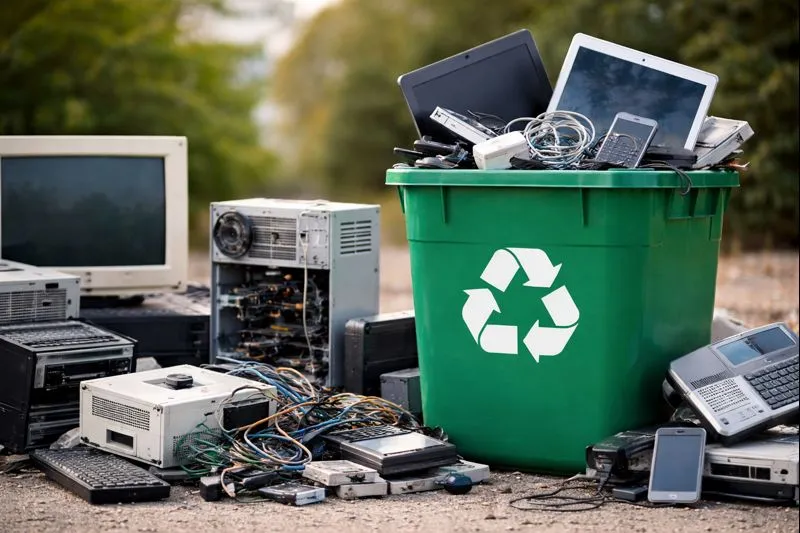
The biotechnologist explains, for example, that magnetic nanoparticles are used to separate and recover metals from electronic waste (e-waste). He points out that these nanoparticles can selectively bind to specific metals, such as gold, silver, and copper, enabling efficient extraction and recycling.
According to him, this approach reduces the environmental impact of e-waste and recovers valuable metals for reuse in various industries.
He also highlights that in solid waste management, nanotechnology enables the creation of advanced landfill liners and covers.
When blended with polymers, he elucidates, nanoparticles provide strong barriers, resist chemicals, and prevent harmful substances from escaping.
Nanomaterials can also speed up the breakdown of organic waste. For example, nano-encapsulated enzymes added to compost can accelerate decomposition, making composting faster and more efficient, Udoh adds.
He urges greater investment in research and development to ignite breakthroughs in nanotechnology. Nurturing local talent through education and hands-on training is just as crucial, he says, inspiring universities to weave nanotechnology into their curricula.
Udoh identifies low public awareness and acceptance of nanotechnology, particularly in developing countries, as a challenge and underscores the need to raise awareness so that everyone understands both the promise and the challenges of this cutting-edge science.
Professor Nnanyelugo Martin-Ike Muonso, Director General of the Raw Materials Research and Development Council, champions nanotechnology as essential to Nigeria’s economic resurgence and green transition.
He points out that as Nigeria grapples with oil spills, e-waste, heavy metal contamination, and industrial pollution, nanotechnology is stepping up to provide solutions. Innovative nanocomposite materials such as magnetic carbon nanotubes, nanozeolites, and titanium dioxide membranes are also breathing new life into contaminated soils.
Muonso reveals that a recent review has called for making nano remediation a cornerstone of long-term ecological restoration in Nigeria.
With the right investment and application, the RMRDC DG enunciates, nanotechnology will transform Nigeria’s environmental landscape, turning persistent national concerns into a resolved chapter of the nation’s history.
