
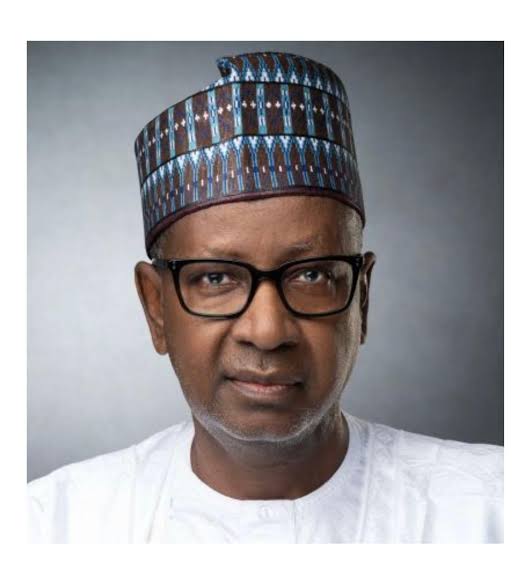
By Tunde Omolehin
By all indications, the political atmosphere in Sokoto East Senatorial District is gradually shifting toward a new direction that will be centred on competence, inclusion, accountability, and purposeful leadership. For years, people of the Sokoto East have lamented inadequate representation, which has caused a multifaceted setback of the zone when compared with its counterparts in the state. Despite the enormous agricultural and commercial potential of the zone, several communities continue to grapple with poverty, displacement, unemployment, and limited access to quality education and healthcare.
The low inclusion in governance, poor infrastructure, and worsening insecurity are a few factors to set the underdevelopment. Understandably, citizens are beginning to ask difficult questions about the quality of leadership required to reverse the trend. It is within this context that Umar Ajiya Isa’s political entrance has attracted considerable public attention. Many believe that such Ajiya’s ambition reflects a leader with administrative experience, grassroots connection, and a proven capacity for results.
Supporters of Ajiya often point to his longstanding philanthropic interventions across Isa Local Government and other parts of Sokoto East. From scholarship schemes for students to educational support materials, empowerment initiatives for vulnerable women, and assistance to communities in need, many residents see him as someone who understands the realities facing ordinary people.
These interventions may not have solved every challenge, but they established an important pattern of leadership that stays connected to the grassroots. Aside from his philanthropy, what perhaps distinguishes Ajiya most is his technocratic background and performance in Nigeria’s strategic oil and gas sector.
In a country where public institutions are often criticised for inefficiency and financial leakages, his stewardship within the Nigerian National Petroleum Company (NNPC) and the Petroleum Products Marketing Company (PPMC) stands out. He became associated with reforms that reportedly helped transform long-standing losses into profitability, achievements many observers described as unprecedented within the institutions.
Such accomplishments matter politically because governance today requires more rhetoric. Citizens increasingly want leaders who can manage resources prudently, negotiate effectively, attract investments, and build systems that deliver measurable outcomes. Sokoto East, confronted by insecurity, youth unemployment, poor road networks, and economic stagnation, may benefit from representation driven by strategic thinking and administrative discipline.
If elected into the National Assembly, many constituents would expect Ajiya to deploy his experience toward attracting federal projects and influencing policies capable of improving the region’s fortunes. The expectations would naturally be high.
First, the electorate would expect stronger advocacy on insecurity. Communities across parts of Sokoto East have suffered attacks, displacement, and economic disruption arising from banditry and cross-border crimes. Ajiya with his national influence and institutional experience would be expected to push for improved security coordination, better support for affected communities, and stronger federal attention to border areas.
On youth development; Sokoto East possesses vast agricultural potential, livestock markets, and trade routes connecting neighbouring Niger Republic and other West African countries. Ajiya effective representation could facilitate federal investments in irrigation, rural roads, agro-processing, and trade infrastructure capable of creating employment and reviving local economies.
In the area of education and human capital development. Ajiya’s previous support for scholarships and learning materials has already shaped public perception of him as someone interested in educational advancement. To build on this, Ajiya would be expected to expand this into his legislative advocacy for the establishment of more tertiary institutions, vocational training centres, and implementation of federal government’s youth empowerment programmes within the zone.
Importantly, many observers believe the 2027 contest in Sokoto East may also test whether politics can move away from personality-driven campaigns toward issue-based engagement. Though in his acceptance message after he obtained the party’s senatorial form, Ajiya emphasised on unity, peaceful participation, and service-oriented politics rather than bitterness or division. That tone may resonate with voters increasingly exhausted by toxic political rivalries that often leave communities more divided after elections.
Nevertheless, admiration and goodwill alone cannot replace democratic accountability. The people of Sokoto East will still expect detailed policy direction, sustained engagement with constituents, and practical solutions to local realities.
But what remains undeniable is that his emergence has added significant momentum to the political conversation in Sokoto East. His blend of corporate experience, philanthropy, traditional recognition, and grassroots support has positioned him as a serious contender ahead of the APC primaries and the 2027 general elections. For the people of Sokoto East, the coming years may offer an opportunity to redefine representation not merely as occupying a seat in Abuja, but as building bridges between governance and the aspirations of his people.
Omolehin, is a public analyst and based in Abuja, FCT.
