
Rakiya A. Muhammad
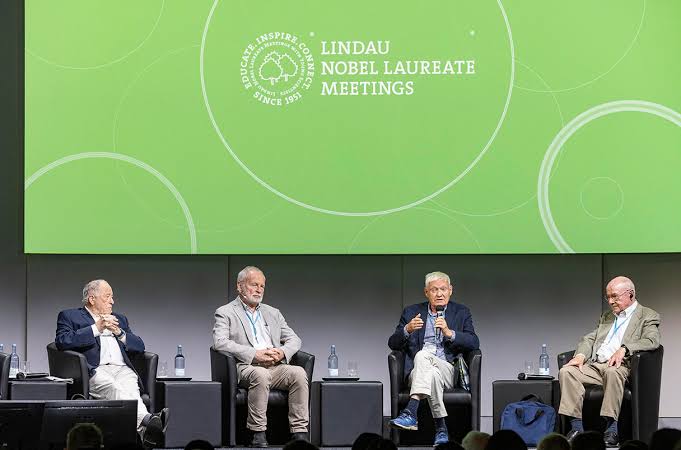
This summer, Lindau, Germany, will host the 75th Lindau Nobel Laureate Meeting, a landmark event uniting the world’s top scientific minds to confront pressing issues in artificial intelligence, quantum science, global health, and scientific integrity.
The forum, scheduled to be held from 28 June to 3 July 2026, will bring together scientists from 63 countries and 88 nationalities for open dialogue on pivotal science and society issues.
The 75th Lindau Nobel Laureate Meeting will convene around 75 Nobel Laureates and more than 600 Young Scientists from across the globe, marking a milestone in the history of intergenerational scientific exchange, according to a statement by the Lindau Nobel Laureate Meeting
Amid global challenges—including geopolitical tensions, rapid technological advances, and debates over trust in science— the 75th Lindau Nobel Laureate Meeting’s four vital themes—Information, Integrity, Life, and Resilience—will drive meaningful cross-disciplinary conversations.
The interdisciplinary programme will dive into thought-provoking questions: Where Does Life Come From? What Does It Mean to Understand? Is There a Global Health? What Could a Quantum Computer Be Used For? How Can Education Build Trust in Science? Is Commercialisation Good for Science?
“Born from the vision of convening scientists from around the world in post-war Germany to meet in a spirit of dialogue and reconciliation, a global movement took shape in 1951,” the statement revealed
“Today, as geopolitical tensions and societal fault lines are deepening, this founding idea remains strikingly relevant: uniting researchers from diverse regions, cultures, generations, and disciplines to advance the science of tomorrow through rigorous debate and shared insight.”
It explained that the interdisciplinary composition of the 75th Lindau Nobel Laureate Meeting participants builds bridges across fields.
“Alongside researchers in Physics, Chemistry, and Physiology/Medicine, several Laureates from the fields of Economic Sciences and Peace are also taking part,” the statement noted.
“This idea also applies for the younger generation: In the selection for the Interdisciplinary Meeting, the Scientific Chairs placed particular emphasis on ensuring that the Young Scientists are studying/doing research at the intersection of at least two Nobel disciplines (physics, chemistry, and physiology or medicine) or at the intersection of one Nobel discipline and another discipline from the social or natural sciences.”
According to the statement, in 2026, the Lindau community will welcome several Nobel Laureates who were recently awarded the Nobel Prize.
“Omar Yaghi, recipient of the 2025 Nobel Prize in Chemistry, will be honoured for his groundbreaking work on metal-organic frameworks (MOFs),” it revealed
“Frederick J. Ramsdell and Shimon Sakaguchi were awarded last year’s Nobel Prize for their discoveries relating to peripheral immune tolerance. Michel Devoret also joins the ranks of the newest Laureates and will return to Lindau for the second time – having first attended as a Young Scientist in 1982, he now returns to the island as a Nobel Laureate.”
For 75 years, the Lindau Nobel Laureate Meetings have provided a unique platform for Nobel Laureates and Young Scientists to exchange ideas.
“Since the first Meeting in 1951, more than 36,000 Young Scientists have participated in the Lindau Meetings – for many of them, it has been an experience that has changed their careers and lives, making them part of a unique international network of scientific excellence,” the statement highlighted.
“Even after years and decades, they are still connected and with the Lindau Meetings through the Lindau Alumni Network.”
