
By Qudirat Hakeem-Apanpa
As Nigeria strives to cement its position as the world’s leading yam-producing nation, agricultural experts and scholars have urged Nigerian youths to embrace emerging technologies that could revolutionise seed yam production
They pointed out that the country’s food security and agricultural economy depend largely on the younger generation’s willingness to acquire new skills and take advantage of agricultural opportunities.
From the rich, red soil of the Nigerian countryside, where the yam tendrils quietly wind their way around stakes beneath the tropical sun, comes a crop that is much more than food.
Yam is a culture. Yam is commerce. Yam is a livelihood. For millions of Nigerians, it is a symbol of abundance. But behind every giant tuber harvested from the earth lies a question that could determine the future of the crop: Who will produce the planting materials for the next generation of yam farmers?
It was against this background that agricultural experts gathered at the University of Ibadan to challenge Nigerian youths to look beyond conventional methods and embrace innovative approaches to yam seed production.
At the centre of the discussion was an emerging technique that uses yam leaves to multiply seed yam, a development experts believe could simplify production, expand access to quality planting materials and strengthen Nigeria’s position in the global yam market.
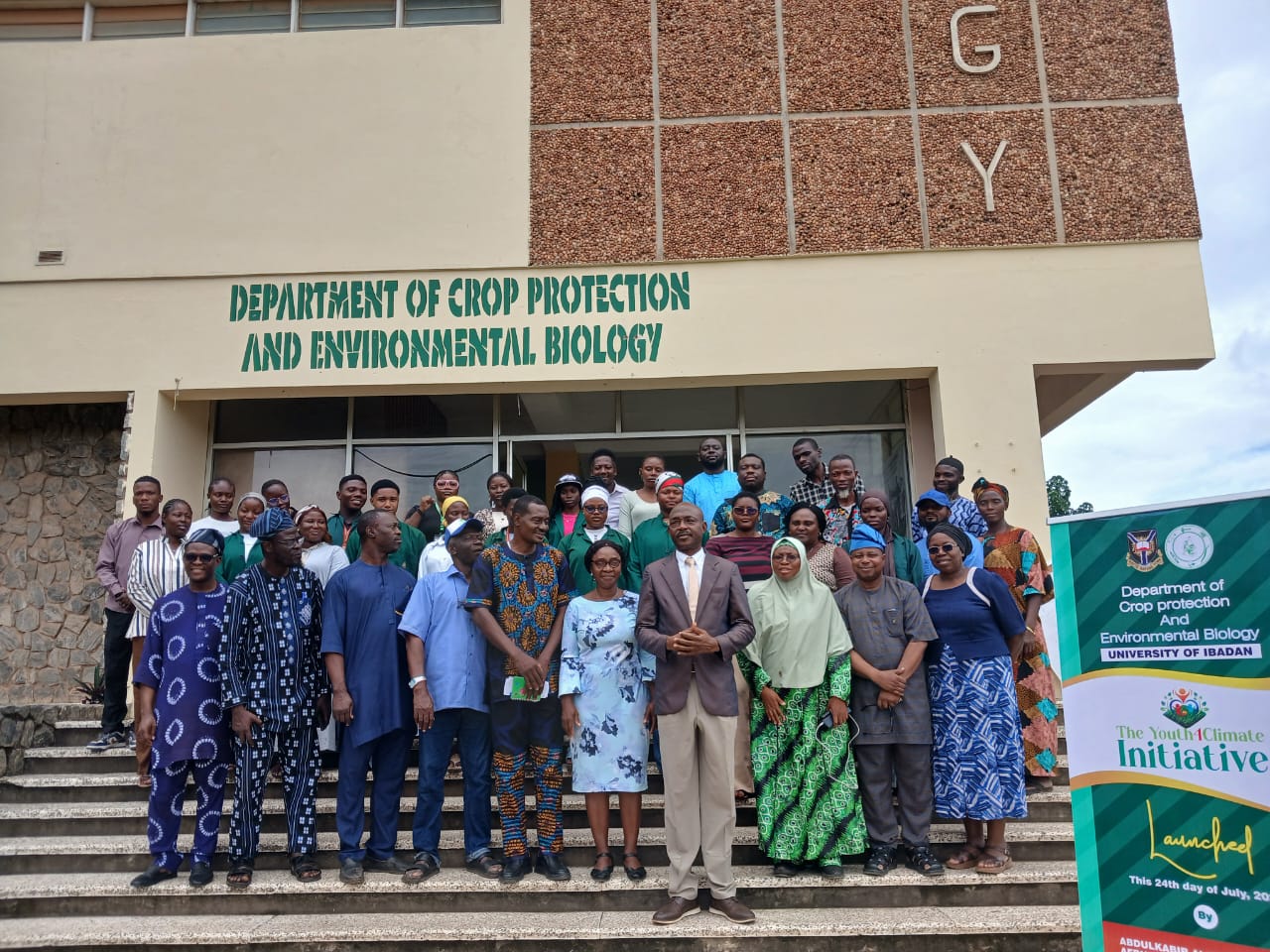
Speaking at a Capacity Development Workshop on Seed Yam Production tagged “The Youth4Climate Initiative,” organised by the Department of Crop Protection and Environmental Biology, University of Ibadan, in collaboration with the AAF Foundation, Professor Tolu Osasanya, Dean, Faculty of Agriculture, noted that Nigeria’s position as a leading yam-producing country placed a responsibility on the younger generation to ensure that production was not only sustained but expanded.
He said the Youth4Climate Initiative was essentially aimed at empowering young Nigerians with the knowledge and practical skills required to multiply yam seeds through yam leaves.
According to him, the innovation could simplify the process of yam planting and make quality planting materials more readily available to farmers.
“As you all know, Nigeria is the highest producer of yam, so we want to empower the youths to produce more yam so that there would be food security,” Professor Osasanya said.
He linked the initiative to the broader global objective of ensuring food security, noting that increased production of safe and hygienic food would ultimately benefit the Nigerian population.
Agriculture Is Rewarding
Professor Osasanya also used the occasion to challenge Nigerian youths to abandon the perception that agriculture was an unattractive profession.
He urged them to be persistent, innovative, and prepared to invest time and energy before expecting immediate returns.
“Nigerian youths are not supposed to be lazy. They are supposed to be unrelenting,” he said, stressing that agricultural success often required preparation, patience, and continuous practice.
Drawing from his personal experience, he disclosed that he went into farming immediately after leaving school in 1988 and had remained convinced that agriculture was a rewarding venture.
He noted that his experience extended beyond his academic responsibilities, describing himself as a practicing cattle farmer and emphasising the enormous opportunities available within the agricultural sector.
He therefore encouraged the young participants to key into the initiative with determination, saying that persistent commitment could eventually enable them to build sustainable livelihoods capable of supporting their families and communities.
Professor Morufat Balogun, immediate past Head of Department, Agric Biology, also implored young Nigerians to become more proactive in acquiring the skills and techniques required for modern yam seed production.
She said the initiative was designed to expose young people to innovations within the yam seed system and equip them with knowledge that could ultimately translate into greater agricultural productivity and economic empowerment.
Professor Balogun stressed that if the new technology was properly managed, adopted and sustained, it could contribute significantly to Nigeria’s economic development through agriculture, while helping the country retain its prominence in the global yam production and export chain.
According to her, Nigerian youths must understand emerging methods of yam production if the country is to safeguard the future of one of its most important food crops.
“Nigerian youths need to learn and understand the new techniques of planting yam for yam not to go into extinction,” she said.
She explained that the workshop was also an opportunity for participants to become better informed about developments in the seed system, understand who was doing what within the agricultural value chain, and identify the appropriate institutions and professionals to approach for further assistance.
Professor Balogun emphasised the importance of moving beyond theoretical knowledge to practical application, networking, and digitalisation, noting that the seed system constitutes a critical component of the overall yam production chain.
She encouraged the participants to apply what they had learned, build networks with relevant stakeholders, and position themselves to take advantage of new opportunities emerging within the agricultural sector.
Opportunity Beyond the Classroom
Earlier, Prof.Abiodun Claudius-Cole, the Head of the Department, who was represented by Dr. Adefoyeke Aduramigba-Modupe of the Physiopathology Unit, urged participants to take full advantage of the opportunity provided by the training.
She said the real value of the programme would be measured not merely by attendance or certificates but by the extent to which participants followed up with actual production.
According to her, continuity remained essential if the knowledge gained during the training was to translate into tangible agricultural development.
She therefore encouraged the participants to demonstrate commitment to the production process and make practical use of the knowledge acquired during the workshop.
The HOD further drew attention to the subsidised membership of the Community-Based Seed Yam Producer Network and the provision of quality starter stocks for participants below 40 years of age.
She described the opportunity as a valuable platform for young people interested in entering the seed yam business, urging them not to misuse the support provided.
The initiative, she explained, was designed to create a pathway through which young people could acquire the necessary skills, obtain quality starter materials, become connected to recognised networks and ultimately participate in the formal seed yam market.
From Training to Enterprise, the three-day programme combined virtual learning with physical practical sessions. The first two days were conducted virtually, while the physical component was organised to provide participants with practical exposure to the technical aspects of the innovation. The practical session generated considerable interest among the students and other participants, many of whom demonstrated enthusiasm to understand the new method and indicated their willingness to commence practical application of the knowledge acquired.
The organisers also registered participating students at a subsidised rate, an arrangement designed to encourage them to become members of recognised seed yam producer networks. The objective is to create a community of trained young producers who can eventually produce and market seed yam through officially recognised channels. For the participants, therefore, the training was not simply another academic exercise. It was presented as a possible bridge between the classroom and enterprise — between knowledge and income and between agricultural innovation and food security.
Experts, Institutions Rally Around Innovation
The workshop also brought together professionals and stakeholders from different parts of the agricultural sector. Among those represented were professionals associated with the International Institute of Tropical Agriculture (IITA), regulatory bodies and other relevant institutions across the South-West.
Their participation underscored the importance of collaboration in developing a sustainable seed system capable of supporting Nigeria’s agricultural ambitions.
For the organisers, bringing researchers, students, farmers, regulators and other stakeholders into the same conversation is essential to closing the gap between agricultural research and practical application. The challenge, however, extends beyond developing an innovation.
The greater challenge is ensuring that such innovations reach the young people who will ultimately inherit the responsibility of feeding the nation. A New Generation of Yam Farmers. As the workshop ended, one message resonated strongly: Nigeria’s agricultural future cannot be secured by relying solely on traditional practices.
The country may have fertile soil, a favourable climate and generations of indigenous knowledge, but the changing realities of climate, population growth, food demand and economic pressures require new thinking. The yam, deeply rooted in Nigeria’s culture and economy, must therefore be supported by equally innovative approaches to its production. The Youth4Climate Initiative is seeking to place young Nigerians at the heart of that transformation — not merely as beneficiaries of agricultural programmes, but as researchers, producers, entrepreneurs and future leaders of the seed yam industry.
From the humble leaf of a yam plant may yet come a new agricultural opportunity. And if the enthusiasm generated at the University of Ibadan can be transformed into sustained practice, enterprise and investment, the young people who gathered for the workshop may become part of a new generation helping Nigeria move from being merely a major producer of yam to building a stronger, more sustainable and commercially viable yam value chain.
The future of the nation’s yam may well begin, not only beneath the soil, but in the hands of the young people learning how to cultivate it.
