
By Qudirat Hakeem-Apanpa
As population rises and pressure mounts on food supply, Professor Olubode Oluseun calls for policy continuity, urban farming, agricultural innovation and stronger links between research and industry.
Nigeria cannot afford to treat agriculture as an issue that can be negotiated, postponed or sacrificed for other development priorities, according to Professor Olubode Oluseun, a lecturer in the Department of Crop Protection and Environmental Biology.
For Oluseun, agriculture is not merely another sector of the economy. It is fundamental to Nigeria’s human development, financial and fiscal policies, physical planning, economic growth, nutrition and ultimately the quality of life of its citizens.
His concern comes against the backdrop of a country whose population continues to expand while food production struggles to keep pace with demand.
“We should not negotiate agriculture,” Oluseun argues, insisting that the place of agriculture in Nigeria’s development must remain non-negotiable.
His position reflects a growing concern that Nigeria’s traditional approach to food production is no longer sufficient to meet the needs of a rapidly urbanising and increasingly populated country.
Population Growth and the Food Question
For decades, Nigeria’s agricultural system was largely built around the production of food in rural areas and its movement across the country. Agricultural produce from the northern part of the country, for instance, has traditionally supplied markets in the South.
But the country’s changing demographic and environmental realities are putting increasing pressure on that model.
Oluseun believes Nigeria must begin to ask a fundamental question: Is agriculture driving population and development, or is population growth driving the need to rethink agriculture?
The answer, he suggests, lies somewhere in the interaction between the two.
As the population increases, demand for food rises. At the same time, urbanisation, climate pressures, changing land-use patterns and other environmental challenges are making traditional agricultural production more difficult.
Consequently, Nigeria needs to rethink not only how much food it produces, but also where and how that food is produced.
Farming Without Traditional Farmland
One of the most promising developments, according to Oluseun, is the emergence of alternative agricultural technologies capable of producing crops in relatively small spaces.
Nigeria has already harnessed some of its rivers through dams and irrigation projects to support agriculture. But the future could involve much more than conventional irrigation and large-scale farming.
Technologies such as hydroponics, aeroponics, greenhouse farming and tissue culture are opening new possibilities.
Hydroponics, for example, makes it possible to grow plants without conventional soil. Instead, plants receive the nutrients they require through carefully prepared solutions.
The advantage is considerable. Rather than cultivating crops across extensive areas of land, farmers can produce certain crops in controlled environments and relatively small spaces.
Aeroponics goes a step further by allowing plants to grow with their roots suspended while nutrients are delivered through a controlled system. Such approaches are already being explored in greenhouse and controlled-environment agriculture.
Then there is tissue culture, which offers another way of multiplying plants.
According to Oluseun, plants do not necessarily have to be propagated only through seeds. Roots, leaves and stems can be used to generate plantlets, potentially allowing farmers and agricultural enterprises to multiply large quantities of planting materials within relatively short periods.
“These technologies are making us rethink agriculture,” he says.
The Rise of Balcony and Compound Agriculture
Agricultural innovation, however, does not have to be confined to sophisticated laboratories or commercial greenhouses.
Oluseun believes ordinary Nigerians can also participate in the transformation of food production.
Even in urban environments where much of the available ground has been covered with concrete, households can cultivate crops using containers, sacks, buckets and other materials.
Vegetables can be grown on balconies and within compounds. Some crops, including yams and pineapples, can also be cultivated in containers under appropriate conditions.
The result, he says, could be a return to what might be described as compound farming, but in a modern urban form.
He is particularly enthusiastic about balcony agriculture, rooftop cultivation and vertical farming, where plants are grown in stacked layers to maximise limited space.
The concept could be especially relevant to Nigerian cities, where land is increasingly expensive and residential spaces are becoming more compact.
Oluseun poses a simple question: if high-rise buildings already have rooftops used for relaxation, recreation or drying clothes, why should some suitable rooftops not also be used for food production?
The objective is not for every household to become a commercial farm. Rather, households can produce a portion of what they consume.
“If 30 or 40 per cent of the vegetables you eat in a week is what you cultivate,” he argues, “you are already contributing.”
The cumulative effect of millions of households doing this could be significant.
More Than Food on the Table
The benefits of increased agricultural production, according to Oluseun, go beyond food availability.
Greater household access to fresh vegetables and other crops could improve nutrition, reduce some household food expenses and contribute to healthier living.
Agriculture could therefore become part of a broader strategy for improving the nation’s quality of life.
For Oluseun, every Nigerian should be encouraged to contribute in some way to food production.
The philosophy is straightforward: people should take some responsibility for what they eat.
Such a culture could complement commercial agriculture rather than compete with it.
The Taste of Fresh Produce
The difference between locally produced and imported food can sometimes be experienced in something as ordinary as a banana.
Oluseun recalls an American friend who particularly enjoys eating fresh Nigerian bananas whenever she visits the country.
The reason, he explains, is that bananas consumed in the United States are often sourced from countries with climates better suited to banana production. The fruit must travel considerable distances before reaching American consumers and undergoes storage and refrigeration along the way.
For his friend, eating freshly harvested Nigerian bananas is therefore a distinctive experience.
For Oluseun, the story illustrates a larger point: Nigeria possesses agricultural resources and climatic advantages that Nigerians themselves must learn to value.
“If people like that can appreciate what we have,” he says in essence, “why can’t we appreciate what we have by investing more in it?”
The Missing Ingredient: Policy Continuity
Nigeria has never lacked agricultural programmes.
Successive governments have introduced initiatives intended to boost agricultural production, including Operation Feed the Nation and the Agricultural Transformation Agenda, among others.
The major weakness, Oluseun argues, is continuity.
Rather than building on successful programmes, successive administrations have sometimes discarded existing initiatives and introduced completely new ones.
That approach, he believes, is counterproductive.
Agriculture requires time.
Trees take years to mature. Irrigation systems require long-term planning and maintenance. Research requires sustained investment before it can generate practical solutions. Farmers also need predictable policies before they can make major investments.
A government that introduces an agricultural programme should therefore not necessarily expect to complete its objectives within a single political term.
Instead, succeeding administrations should evaluate what has been achieved, identify weaknesses and improve upon existing programmes.
“Building on what we have” should become a guiding principle of agricultural policy, Oluseun argues.
Lessons From Countries with Greater Constraints
Nigeria can also learn from countries that have been forced to innovate because of difficult environmental conditions.
Oluseun points to countries such as Israel and Saudi Arabia.
Israel has developed highly sophisticated agricultural technologies despite limitations involving land and water. Saudi Arabia, meanwhile, has developed agricultural systems in an environment that lacks the natural water resources available to Nigeria.
The point is not that Nigeria should simply copy these countries.
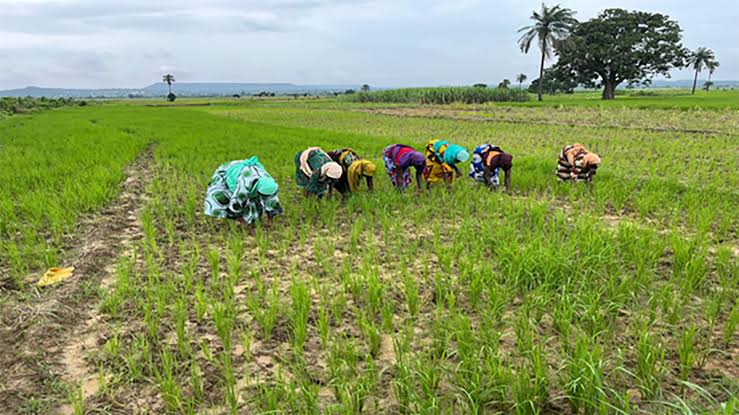
Rather, their experiences demonstrate that environmental constraints can stimulate innovation.
Nigeria arguably has an advantage because it possesses substantial water resources, yet the country has not always translated that advantage into sustainable agricultural development.
The challenge, therefore, is to create agricultural programmes capable of surviving political transitions and responding to changing environmental and demographic realities.
Why Are the Problems Still the Same?
Perhaps one of Oluseun’s strongest criticisms concerns the persistence of problems that have been identified for generations.
As far back as secondary school, Nigerian students studying agriculture were taught about challenges such as poor roads, inadequate storage facilities and limited technical knowledge.
Decades later, many of those same problems remain.
Nigeria has universities and research institutions conducting sophisticated research. Scientists are working in fields ranging from biotechnology to nanotechnology and other areas of modern agricultural science.
But a fundamental question remains: How effectively is that research reaching the ordinary farmer?
A scientific breakthrough published in an academic journal has limited impact if farmers cannot access, understand or afford the technology.
Oluseun believes there must be a stronger relationship between the university, government, industry and the wider community.
He describes this as the need for a handshake between “gown and town.”
Research institutions must not exist in isolation from the people who ultimately need their discoveries.
Building Technology for Nigeria
Another major challenge is agricultural machinery.
Nigeria imports a significant amount of agricultural equipment, but Oluseun argues that technologies developed elsewhere may not always be ideally suited to Nigerian conditions.
Agricultural machines are often designed around the terrain, farm sizes, climate, crops and farming systems of the countries where they are produced.
Nigeria therefore needs to develop what could be described as appropriate technology—equipment and systems designed specifically around local agricultural realities.
The process, he suggests, should begin at a manageable scale.
Researchers can identify specific problems faced by farmers, develop solutions at the micro level, test them and then scale up those that work.
Such an approach could simultaneously strengthen agriculture and stimulate local manufacturing.
It could create jobs, develop technical skills and reduce dependence on imported machinery.
From the Laboratory to the Farm
Oluseun’s academic and professional experience has exposed him to the relationship between environmental management, agriculture and development.
As a lecturer in the Department of Crop Protection and Environmental Biology, he specialises in plant ecology, particularly biodiversity conservation and management.
He is also a Watson International Scholar of the Environment from a university in the United States, and has undertaken extensive research in biodiversity, particularly as it relates to agriculture.
His professional experience extends beyond academic research into the development arena and the built environment, including work connected to oil and gas, construction, road construction, infrastructure, gas pipelines and large-scale farms.
That breadth of experience, he suggests, reinforces the importance of approaching agriculture as part of a wider development system.
Food production does not exist in isolation. It is connected to roads, energy, water, technology, housing, industry, environmental management, research, finance and markets.
Agriculture as a National Responsibility
The future of Nigerian agriculture, therefore, cannot rest entirely on the government.
Government must provide the policies and infrastructure required for agriculture to thrive. Research institutions must generate knowledge. Industry must commercialise useful innovations. Farmers must adopt appropriate technologies. Households can contribute through urban agriculture, while consumers can support local production.
The ultimate objective should be to develop an agricultural ecosystem in which these different components work together.
For Oluseun, the urgency is undeniable.
Nigeria’s population will continue to grow. Urban areas will continue to expand. Competition for land will intensify. Climate and environmental pressures will continue to affect food production.
The country cannot respond to these realities by relying exclusively on the agricultural methods of the past.
Instead, it must combine traditional knowledge with modern science, large-scale commercial agriculture with household food production, rural farming with urban agriculture, and academic research with practical technology.
Above all, agricultural policy must outlive political administrations.
A New Agricultural Mindset
The agricultural future envisaged by Oluseun is one in which a farm is no longer defined simply as a large piece of rural land.
A farm could be a greenhouse. It could be a rooftop. It could be a balcony. It could be a compound. It could be a vertical structure. It could be a laboratory producing thousands of planting materials through tissue culture.
What matters is the ability to produce food sustainably and efficiently.
For Nigeria, this requires a fundamental shift in mindset.
Agriculture must no longer be treated as a sector that governments remember when food prices rise and neglect when other economic priorities emerge.
It must become a permanent pillar of national development.
The challenge is enormous, but so is the opportunity.
Nigeria has the land, water, climate, human resources, research institutions and a huge domestic market to build a powerful agricultural economy. What remains is to connect these resources through sustained policy, innovation, investment and participation.
As Oluseun’s argument suggests, Nigeria’s agricultural future should not be negotiated away. It should be deliberately built—one policy, one farm, one innovation and, increasingly, one household at a time.
