
By Qudirat Hakeem-Apanpa
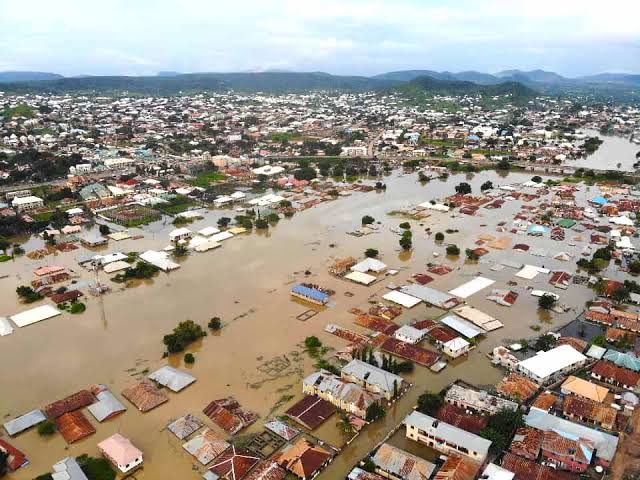
What was once a harmless stream of runoff gathers momentum, sweeping through blocked drainage channels, overflowing riverbanks and invading streets. Before long, homes are surrounded by water. Roads disappear. Farmlands are washed away. Vehicles are carried from their parked positions. Walls collapse. And, in the worst cases, families are forced to leave their homes in search of safety.
For many Nigerians, flooding is an increasingly familiar story. But beneath the images of submerged streets and stranded residents lies a more complex environmental crisis—one in which soil erosion, indiscriminate waste disposal, deforestation, uncontrolled construction and poor urban planning interact to turn heavy rainfall into disaster.
Professor Osunsanya Odutola, a soil resources management expert at the University of Ibadan, believes much of the damage can be prevented if Nigerians understand that the movement of water across the landscape is not something to be taken lightly.
“Erosion is a menace that destroys the farm and the community,” he explains. “It can displace people from their homes and remove a substantial amount of soil.”
But the problem does not end with the soil that disappears. According to him, eroded soil can be deposited in drainage channels, streams and waterways, reducing their capacity to carry runoff. When those channels are already clogged with household waste, the consequences can be devastating.
The result is a dangerous chain reaction: heavy rainfall produces runoff; blocked channels prevent its free movement; water accumulates and gains velocity; and the resulting force begins to attack roads, buildings, farmland and anything standing in its path.
THE DANGER WE DO NOT SEE
Floodwater is often perceived simply as excess rain. But water in motion can become a destructive force.
Professor Osunsanya says inadequate public awareness is one of the reasons Nigeria continues to struggle with erosion and flooding.
He argues that many residents do not understand the consequences of dumping refuse into drainage channels. To them, the water flowing through a gutter may appear ordinary—until the channel becomes blocked and the accumulated water begins to search for another route.
That new route could be a road. It could be a house. It could be a farm. Or it could be an entire community.
“If enough advocacy is given to the people about the danger of erosion and dumping refuse to block the drainage,” he says, “they will stop doing anything that will affect the free flow of water.”
For him, public education must become a central component of Nigeria’s flood-management strategy.
Government agencies, he argues, should intensify sensitisation programmes, particularly for farmers and residents living in environmentally vulnerable areas.
WHERE THE WATER GOES MATTERS
Geography also plays a critical role. Professor Osunsanya identifies communities located on hillsides, slopes and low-lying valleys as particularly vulnerable.
Water naturally moves downhill. As it descends a slope, its speed and volume can increase, especially when vegetation has been removed and the soil can no longer absorb sufficient water.
Those living at the bottom of the slope may therefore experience the consequences of decisions made much higher up.
“The people at the base or valley are the ones that will receive the negative aspect of the flooding,” he says.
This raises a fundamental question for urban planners, developers.
THE PLANNING FAILURE
For Williams Ero, a publisher, writer, analyst and printer, Nigeria’s flooding crisis cannot be explained entirely by nature.
He believes poor planning, institutional negligence and failure to enforce existing regulations have significantly aggravated the situation.
Floding, he argues, is not a new phenomenon. Nigerians have studied it, written about it and proposed solutions to mitigate its effects.
The problem, in his view, is implementation. “We have solutions for these things,” Ero says. “The issue has always been to implement some of the solutions we have given to ourselves.”
He points to several practices that worsen flooding: building on waterways, blocking drainage channels, ignoring natural gradients and removing vegetation without adequate environmental safeguards.
In his assessment, the first step towards solving the problem is honesty. Society must acknowledge the ways in which human activities contribute to environmental disasters before attempting to address the consequences.
“If we must tell ourselves the truth,” he says, “we know that flooding is not a new topic.”
WHEN WARNINGS ARE IGNORED
There is another crucial dimension to the problem: early warning and preparedness.
Ero argues that when meteorological authorities issue warnings of potentially destructive rainfall, governments should not wait for the flood to arrive before acting.
Communities living downstream, near rivers and at the base of hills are particularly vulnerable. Where necessary, he says, residents should be temporarily relocated to safer, higher ground before extreme flooding occurs.
This approach would shift Nigeria’s response from reaction to prevention. Instead of waiting for houses to collapse before providing relief materials, authorities could identify vulnerable settlements in advance, communicate risks to residents and establish evacuation and temporary shelter arrangements.
The difference could be measured not only in naira but in lives saved and families spared the trauma of displacement.
CLIMATE CHANGE OR A PLANNING CRISIS?
The flooding debate inevitably intersects with climate change.
Extreme rainfall events, changing weather patterns and rising environmental risks have made climate resilience an increasingly important part of development planning.
Ero, however, argues that Nigeria must also confront the immediate, human-made factors within its control.
He contends that Africa’s contribution to global emissions is comparatively small and that Nigeria should not use climate change as an excuse to ignore domestic failures in planning, drainage management, environmental regulation and security.
His argument points to an important distinction: even where climate change contributes to increased rainfall risks, the scale of destruction can be determined by how prepared—or unprepared—a community is.
A heavy rainfall event does not have to become a humanitarian disaster.
Poor drainage, blocked waterways, uncontrolled construction and loss of natural vegetation can transform a weather event into a catastrophe.
THE NEXT 10 TO 20 YEARS
Professor Osunsanya offers a warning that should concern planners, policymakers and citizens alike.
If Nigeria continues to construct homes and infrastructure in unsuitable locations, cover large portions of the land surface with concrete, remove vegetation and ignore natural drainage patterns, flooding could become significantly more severe in the coming decades.
Urban development, he argues, must be guided by proper classification of land.
Some areas should be designated for residential development. Others should remain green spaces, agricultural land, drainage corridors or natural flood buffers. The central question should not simply be: “Can we build here?” It should be: “Should we build here?”
THE HUMAN COST
Behind every flood statistic is a human story. A mother watching water enter her home. A farmer standing beside a field whose topsoil has disappeared. A family carrying belongings to higher ground. A child unable to get to school. A trader watching stock destroyed by floodwater.
An elderly person forced to abandon a home built over decades.
Displacement is therefore not merely the physical movement of people from one location to another. It is a disruption of identity, livelihood, community and security.
For communities repeatedly affected by floods, rebuilding after every disaster may become a cycle of loss. The more sustainable response is to prevent avoidable damage before it happens.
FROM FLOOD RESPONSE TO FLOOD RESILIENCE
The solutions are neither mysterious nor entirely new. They require a combination of environmental education, proper urban planning, effective drainage systems, enforcement of environmental laws, protection of waterways, responsible waste disposal, reforestation, soil conservation, early-warning systems and community preparedness.
Farmers need practical knowledge about cultivating slopes. Homeowners need guidance on drainage and landscaping.
Developers need to respect environmental regulations. Urban planners need accurate flood-risk maps. Governments need to enforce existing laws rather than allowing illegal construction to flourish.
And citizens must understand that throwing a bag of refuse into a drainage channel may seem insignificant—but thousands of such decisions can collectively turn a drainage system into a blockage. The challenge, ultimately, is shared.
A CHOICE BETWEEN WATER AND WISDOM
Flooding may be natural. Displacement may be the consequence. But much of the destruction does not have to be inevitable.
The water will always seek its natural path. The question is whether society will respect that path or obstruct it.
Nigeria’s cities and communities stand at a critical point. Continued unplanned expansion, deforestation, indiscriminate waste disposal and construction in vulnerable areas could deepen the crisis. But a different future is possible.
It is a future in which drainage channels are kept clear, waterways are protected, slopes are stabilised, compounds retain green spaces, farmers protect their soils and vulnerable communities receive timely warnings.
It is a future in which development does not mean covering every available surface with concrete.
And it is a future in which the first response to flooding is not merely rescue—but prevention.
Because when the waters rise, the real measure of a society is not simply how quickly it can respond to disaster. It is how wisely it planned before the rain came.
