
Rakiya A. Muhammad
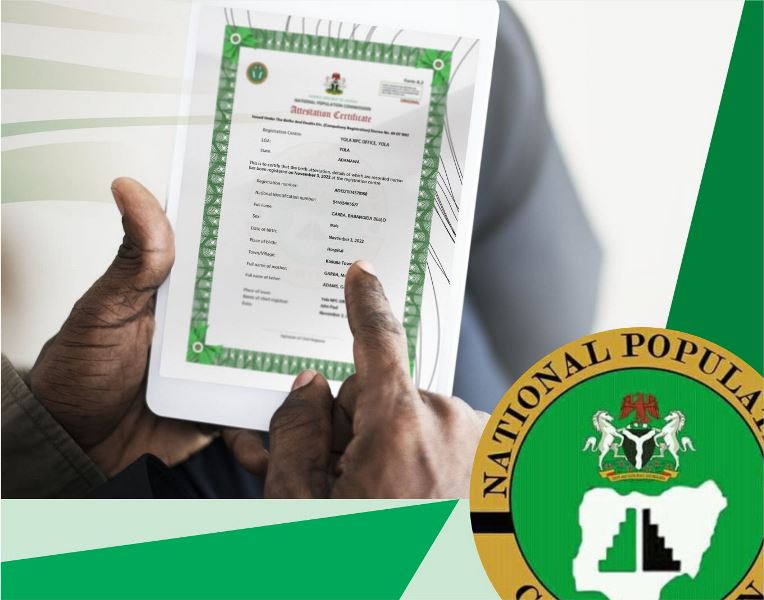
Wafaa Saeed Abdelatef, UNICEF Representative in Nigeria, has underscored the importance of a birth certificate, saying it opens doors to protection, essential services, and new opportunities.
“Birth registration is far more than a certificate,” he stated. “It is a gateway to protection, services, and opportunity.”
Abdelatef made these remarks in Abuja during Africa Civil Registration and Vital Statistics (CRVS) Day 2026, themed “New CRVS Decade (2026-2036): Consolidating the gains of the Africa Programme on Accelerated Improvement of Civil Registration and Vital Statistics (APAI-CRVS) and securing the future of Civil Registration and Vital Statistics in Africa through integration, decentralisation and digitalisation.”
He stressed the need to strengthen birth registration systems to uphold children’s rights and ensure the rights of every child.
Abdelatef affirmed: “UNICEF will continue working with the Government of Nigeria and partners to strengthen integrated, decentralised and digitalised systems that ensure every child is counted, protected and able to access their rights.”
Dr Aminu Yusuf (Talban Wushishi), Chairman of the National Population Commission (NPC), emphasised the Commission’s mission to ensure that every child, regardless of birthplace, is counted, protected, and recognised by law.
“Every registered birth strengthens the foundation for child protection and national development,” he added.
Engr. (Dr.) Abisoye Coker-Odusote, Director-General and CEO of NIMC, stated that integrated digital identity systems support individuals from birth to adulthood and strengthen good governance.
Hon. (Engr.) Bello Lawal, National President of the Association of Local Governments of Nigeria (ALGON), highlighted the importance of decentralisation.
“Decentralisation is essential to ensuring that children in remote and underserved communities are not left behind,” he stated.
“Bringing services closer to families increases access and encourages timely registration.”
Hon. Okunjimi John Odimayo, Chairman of the House Committee on the National Population Commission, noted that robust civil registration and vital statistics systems enable better planning, more effective service delivery, and improved development outcomes.
NPC administrative data show that digital birth registration services now reach over 6,000 of Nigeria’s 8,809 wards, with targeted efforts registering more than 14.5 million children.
Reports indicate registration services are now more closely linked to health facilities and community outreach, providing direct support to families in states such as Bayelsa, Gombe, Jigawa, Taraba, Kebbi, Niger, and Zamfara, and enabling more children to be registered at birth.
Despite these advances, significant challenges remain across the continent. Only about half of children under five in sub-Saharan Africa are registered at birth, making the region home to the world’s largest number of unregistered children.
As Africa enters a new decade of strengthening CRVS systems, stakeholders in Nigeria have pledged to expand access to birth registration and ensure that every child receives a legal identity at birth
