
By Qudirat Hakeem-Apanpa
In an age increasingly characterised by religious intolerance, strained family relationships, rising mental health concerns and the growing influence of social media on personal conduct, the call for moderation has become more urgent than ever.
For Muslims, the challenge is not simply to profess faith, demonstrate religious commitment or observe prescribed acts of worship, but to understand how to translate the teachings of Islam into balanced living, healthy relationships, emotional stability and meaningful contributions to society.
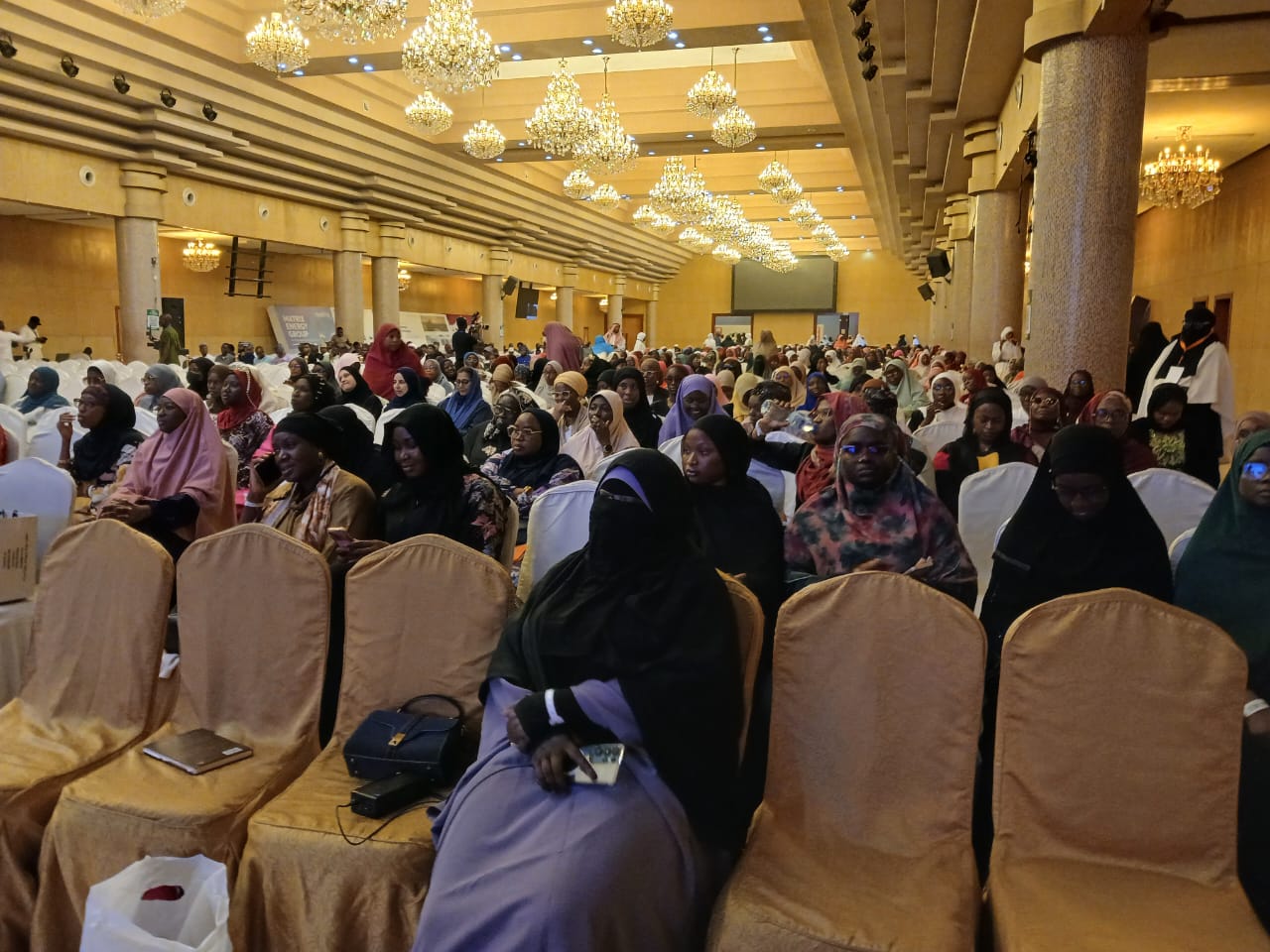
This underlying message resonated through the discussions at the 2026 1Ummah Unity and Peace Conference, where prominent Islamic scholars and religious leaders examined the relationship between faith, moderation, mental well-being, family stability, and peaceful coexistence.
The two-day conference, held at the Oriental Hotel, Victoria Island, Lagos, featured many Islamic scholars of repute who spoke extensively on the theme and several important topics.
Through thought-provoking presentations on the anatomy of balance, raising the next Ummah, the dangers of religious extremism and the challenges confronting contemporary marriages, the conference offered a compelling reminder that the strength of the Muslim Ummah lies not in excess, intolerance or the imposition of personal convictions, but in moderation, knowledge, compassion and responsible conduct.
Anatomy of Balance: Between Excess and Negligence
In his presentation, Imam AbdulRahman Ahmad challenged Muslims to examine the delicate relationship between excess and negligence, describing the ability to maintain equilibrium as a fundamental requirement for a successful religious and worldly life.
He explained that Islam does not encourage either Ifrat (excess) or Tafrit (negligence or falling short), insisting that both extremes can undermine an individual’s relationship with Allah SWT and responsibilities to humanity.
According to him, the principle of balance must extend to every aspect of human existence, particularly religious convictions, worship, relationships and personal conduct.
Imam Ahmad cautioned Muslims against allowing religious enthusiasm to degenerate into extremism, intolerance or the stigmatisation of people who hold different religious beliefs.
No religion, he argued, can achieve meaningful growth through condemning and alienating others.
Rather than imposing convictions on people or overwhelming them with religious expectations, Muslims should cultivate understanding, conviction and positive engagement.
He also stressed the importance of moderation in acts of worship, particularly voluntary prayers and other recommended religious observances. While encouraging Muslims to embrace Nawafil (voluntary acts of worship), he advised that individuals should undertake what they could consistently sustain rather than assume burdens beyond their capacity.
This principle is consistent with the Qur’anic teaching in Suratul-Baqarah, verse 286, which states that “Allah SWT does not burden a soul beyond its capacity”. Imam Ahmad further explained that moderation should not be mistaken for compromise in religious obligations. A Muslim can be simple without being untidy, modest without abandoning neatness, and compliant with Islamic injunctions while maintaining appropriate personal presentation and dignity. For him, the real struggle is maintaining equilibrium in a world that constantly pulls people toward one extreme or another.
He described this continuous struggle to remain balanced as an expression of Iman (faith), reminding believers that having faith does not exempt anyone from trials and difficulties. The Qur’an itself states that believers will be tested, just as those before them were.
He equally warned against extravagance, drawing attention to the Qur’anic injunction that wasteful people are described as brothers of Satan. At the heart of his presentation was the need for Muslims to constantly purify their intentions by asking themselves fundamental questions: What do I seek to achieve? Whose approval am I pursuing? Am I acting to impress people or to earn the pleasure of Allah SWT? Ultimately, he maintained that seeking Allah’s pleasure is far more valuable than pursuing material wealth, public recognition, or social approval.
Mental Health: The Islamic Case For Seeking Help
Beyond religious moderation, the conference highlighted the often-neglected relationship between spirituality, psychological wellbeing, and social responsibility.
One key argument was that mental wellbeing should not be treated as an isolated personal concern, but as an essential foundation for individuals to function effectively, contribute meaningfully to society, and sustain healthy relationships.
Dr Ahmad Mohammed explained that, reflecting on the psychological and social consequences of the COVID-19 pandemic, the discussions highlighted the need for Muslims to pay greater attention to their emotional and mental well-being. A particularly important point was that seeking help should never be regarded as a sign of weakness or a source of shame.
According to him, “Prophet Muhammad (SAW), through his teachings and interactions with his companions, demonstrated the importance of consultation, support, compassion and concern for others”.
Muslims were therefore encouraged not to bottle up emotional difficulties or allow personal challenges to accumulate until they become overwhelming. The discussions identified building relationships with neighbours, maintaining supportive social connections, and creating environments where people can freely discuss their challenges as important elements of community well-being.
The discussions also examined anger management and the different ways individuals respond to conflict and emotional pressure. Highlighting common responses such as confrontation, avoidance, withdrawal, and excessive people-pleasing, the presentation encouraged individuals to understand their own behavioural patterns.
Four communication styles were identified as particularly relevant to interpersonal relationships: Passive communication, in which individuals suppress their feelings and fail to express their needs; Aggressive communication, characterised by hostility, domination and disregard for the feelings of others; Passive-aggressive communication, where resentment is expressed indirectly, often through sarcasm, hostility or subtle antagonism; and Assertive communication, regarded as the healthier approach, which allows individuals to communicate their concerns firmly and respectfully while acknowledging the perspectives of others.
This distinction matters especially in marriage, parenting, and other close relationships, where poor communication can gradually erode trust and affection. The discussions also showed that childhood experiences often shape how individuals respond to challenges in adulthood. Understanding these patterns is therefore necessary to break unhealthy behavioural cycles.
Another growing concern identified was excessive dependence on electronic gadgets and digital platforms, particularly among children and young people. Beyond wasting productive time, uncontrolled gadget use can interfere with sleep patterns and negatively affect other aspects of mental well-being.
The Two-day conference also challenged the tendency to interpret every personal or family difficulty exclusively through a spiritual lens. While acknowledging the importance of faith and spiritual support, participants were encouraged to recognise that some problems require psychological understanding, professional intervention and behavioural change. Addiction, it was emphasised, is not limited to substance abuse. People can also become excessively dependent on habits and activities that gradually undermine their well-being.
Ultimately, however, individuals must recognise destructive patterns and be willing to change, even when the process is difficult.
Raising Next Ummah: Imperative of Moderation
In his presentation, Sheikh Said Rageah drew attention to the responsibility of nurturing a generation capable of upholding the principles of moderation, justice and balance.
The expression Ummah Wasatan, drawn from Suratul-Baqarah, verse 143, describes the Muslim community as a middle or justly balanced nation. The concept goes beyond avoiding religious extremism. It demands fairness, wisdom, tolerance, responsibility and the ability to maintain a balanced perspective in dealing with people and circumstances.
The presentation raised an important concern about the tendency among some Muslims to make what Allah has permitted unnecessarily difficult while making prohibited practices appear easy or attractive. The speaker observed that such contradictions can create confusion and frustration, particularly in family life and marriage.
The implication is that Muslims must understand the objectives of Islamic teachings rather than reduce religion to unnecessary hardship, rigid expectations or personal interpretations imposed on others.
Raising the next Ummah, therefore, requires parents, religious leaders and society to model moderation in their conduct and relationships. Children must not merely be taught religious rules; they must also witness the values of compassion, fairness, patience and responsibility in the lives of the adults raising them.
Going Beyond Limits: Danger of Excessiveness
Another significant contribution came from Sheikh Dr Mohammad Salah, who examined the dangers of Ghuluw — religious excessiveness or going beyond the limits prescribed by Islam. His presentation, When Zeal Becomes Destruction: Ghuluw, challenged the assumption that extreme religious enthusiasm necessarily indicates stronger faith. Instead, the discussion underscored the need to distinguish sincere religious commitment from excessive behaviour that departs from the teachings of Allah SWT and the Sunnah of Prophet Muhammad (SAW).
Muslims were reminded of the importance of sincerity, obedience and compliance with the principles established by the Qur’an and Sunnah. Equally important was the responsibility to investigate matters properly before passing judgement on individuals or situations.
The warning is particularly relevant in an era when religious disagreements can quickly escalate through social media, where unverified allegations, premature conclusions and public condemnation often replace patience and proper investigation. The broader lesson is that religious commitment must be matched with knowledge, sound judgement, and humility. Zeal without wisdom can become destructive, while knowledge without compassion can undermine the very values religion seeks to promote.
When Marriage Fails: Love Alone is Not Enough
Perhaps one of the most compelling discussions at the conference centred on the growing challenges facing contemporary marriages and the need to restore affection, mercy, mutual respect, and responsibility within the family. Speaking on When Marriage Fails: Mawaddah wa Rahmah, Rights, Roles and Mercy in the Home, Imam Sanni K. Yusuff examined the Qur’anic foundations of marriage, particularly the concepts of Mawaddah (love and affection) and Rahmah (mercy and compassion).
Drawing from Surah Ar-Rum, verse 21, he explained that Allah SWT identifies love and mercy as two of the remarkable signs embedded in the institution of marriage.
He argued that while affection helps sustain a relationship, mercy is indispensable, particularly when the initial excitement and emotional intensity of marriage begin to diminish. Love may fluctuate, he observed, but mercy enables couples to remain considerate, patient and humane towards one another even during difficult periods.
This distinction provides an important framework for understanding why some marriages collapse despite the claims of love that initially brought the couples together. The Imam identified several contemporary practices that are gradually eroding affection and mercy in marriages. One is the growing tendency among couples to use social media to express marital grievances, exchange indirect insults, or publicly ridicule one another.
He described this behaviour as a sign of immaturity, warning that couples often underestimate the damage when private disagreements become public entertainment. Friends, colleagues, relatives, and in-laws who encounter such posts may interpret, amplify, or distort the original issues, making reconciliation more difficult.
He also condemned deliberately depriving a spouse of their rights because of anger or disagreement. A husband, for instance, must not allow temporary resentment to make him forget that his wife is a human being with dignity and rights, as well as the mother of his children.
He emphasised that these rights are not favours to be granted at a husband’s convenience but responsibilities established by Allah SWT. Another major challenge which he emphasised is third-party interference in marital affairs.
While the Qur’an provides for reconciliation through the appointment of representatives from both families when serious discord arises between spouses, the Imam cautioned against the involvement of individuals whose interventions are motivated by bias, personal interests or the desire to control the marriage.
He distinguished between constructive intervention and destructive intrusion. Internal third parties may include members of the immediate family, while external parties may comprise Imams, trusted friends, professional marriage counsellors, and other responsible individuals. The critical consideration, he stressed, is the character, wisdom and impartiality of whoever is invited to intervene.
Such individuals must have the courage and maturity to reprimand both parties when necessary, rather than automatically supporting one spouse against the other. He further observed that fear within a marriage may indicate a serious absence of the mercy and emotional security that should characterise the relationship.
Marriage, according to the Islamic ideal, should be an environment of affection, tranquillity and compassion, not intimidation and emotional oppression. The absence of responsible people capable of correcting marital misconduct was also identified as a major concern. Couples need trusted individuals who can speak honestly, challenge their excesses, and guide them toward reconciliation without taking sides.
Connect Before You Correct: Responsibility of Parenting
Discussions on mental wellbeing and family stability also raised important questions about parenting and children’s emotional development. Parents were encouraged to understand that effective correction must begin with connection. Children who feel loved, appreciated and emotionally secure are more likely to respond positively to guidance and discipline. Rather than constantly criticising them, parents should learn to acknowledge their achievements, encourage their efforts and help them develop the confidence to overcome setbacks.
The ability to manage failure is an essential life skill that must be deliberately cultivated. Children should understand that failure is not the end of their journey but an opportunity for learning, reflection and improvement. Similarly, adults must learn to accept that not every situation can be changed through force or argument. Sometimes, meaningful transformation begins when individuals are willing to change their own attitudes and behaviour. Family well-being, therefore, requires continuous learning, mutual understanding and, where necessary, professional counselling and therapeutic support.
The Bigger Picture: Building A Society Rooted in Mercy and Moderation
Taken together, the presentations at the 2026 Unity and Peace Conference offered a broader understanding of what it means to live as a Muslim in contemporary society. The message was not simply a warning against religious extremism or a call for better marriages. It was an appeal for a fundamental reassessment of how Muslims approach faith, personal relationships, parenting, mental health and their responsibilities to the wider community.
A balanced Muslim must understand that religious devotion should not become an excuse for intolerance, that authority should not become oppression, that marriage should not become a platform for domination, and that parenting should not become an exercise in intimidation. Equally, mental health challenges should not be dismissed, emotional difficulties should not be concealed out of shame, and seeking appropriate help should not be confused with a lack of faith.
The conference also reinforced the need for religious leaders to communicate Islamic teachings in ways that inspire understanding and conviction rather than fear, unnecessary hardship or alienation. In a society where family structures are under increasing pressure, young people navigate complex social influences, and religious differences can become sources of tension, the principles of moderation and mercy offer an important pathway toward peaceful coexistence.
Ultimately, the true measure of religious commitment should not be the intensity with which individuals proclaim their faith, but the extent to which that faith reflects in their character, relationships, compassion, fairness and contributions to humanity.
For the Muslim Ummah to become a true Ummah Wasatan, moderation must move beyond sermons and conference declarations into homes, schools, mosques, workplaces and public life.
The true anatomy of a peaceful and progressive Muslim society lies in balancing faith with wisdom, conviction with tolerance, discipline with compassion, and rights with responsibilities.
Other important topics treated at the conference include ‘When marriage is tested: Mercy in conflict, Repair and Separation’ by Imam Sanni Kay, ‘Taqsir: Diseases of the Heart that Divide the Ummah ’ by Dr Fathut Hashmi, ‘The Quiet Extreme’ by Sheikh Jabata, and ‘Faith, Politics and the Ballot’ by Dr Sanusi Lafiagi.
Highlights of the conference include free medical check-ups by the Islamic Medical Association of Nigeria, Lagos State Chapter, Couple Matchmaking of Interested youths,
Others include free to subsidised fibroid treatment and surgery by The Pearl Specialist Foundation. The kids and Teens section, where they are trained on how to live life as great Muslims and become God-fearing adults, is not left out.
