
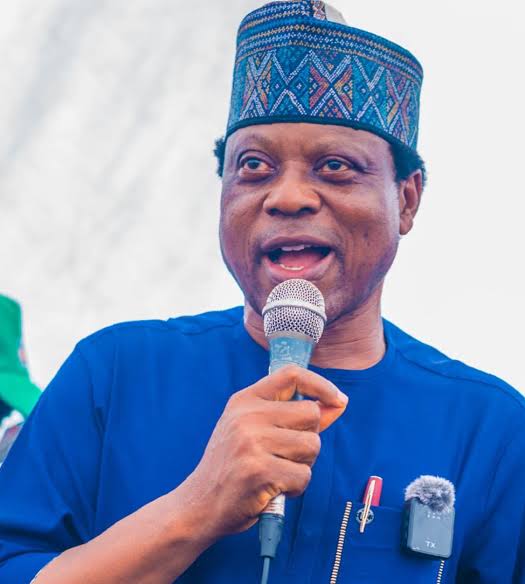
By Qudirat Hakeem-Apanp
Engr. Aderemi Oseni, the All Progressives Congress (APC) candidate for Oyo South Senatorial District, has called on the government and security agencies to strengthen security arrangements to prevent violence and attacks during the ongoing electioneering activities in Oyo State.
Oseni disclosed that he had been attacked on more than one occasion during the campaign period but escaped unhurt by the grace of God. He urged politicians across party lines to shun bitterness, intimidation and violence in the interest of peace and democratic stability.
He described the growing incidents of violence associated with political activities in the state as worrisome, while commending the police and other security agencies for their efforts in maintaining law and order.
The APC candidate, who is also a member of the House of Representatives, appealed while speaking with journalists at the October Lecture organised by the Veteran Journalists Association of Nigeria (VJAN) in Ibadan, the Oyo State capital.
The lecture, which had Oseni as chairman of the occasion, was themed: “Is Nigeria a Nation or a Country? The Way Forward.”
Earlier, the guest lecturer, Professor of Comparative Politics at the University of Ilorin, Prof. Emmanuel O. Ojo, called for a comprehensive restructuring of Nigeria’s political and constitutional arrangements, warning that the country could face an imminent catastrophe if it did not take urgent steps to address its fundamental challenges.
Ojo urged the Federal Government to revisit the various national conference reports produced under successive administrations, from the military government of late General Sani Abacha to the civilian administrations of former Presidents Olusegun Obasanjo and Goodluck Jonathan.
He also challenged the government to determine whether Nigeria should operate a two-tier or three-tier federal structure, arguing that the present arrangement had weakened local governments and undermined grassroots development.
According to him, granting local governments genuine autonomy would accelerate grassroots development, particularly given Nigeria’s size and diversity.
The don also advocated adopting a new constitution that would devolve more powers to the federating units, describing the existing constitutional framework as inadequate to address the country’s peculiar challenges.
He argued that Nigeria could hardly be described as a nation in the strict sense because it lacked some defining characteristics of nationhood, given its deep cultural, linguistic, religious, and traditional diversities.
Ojo, however, described Nigeria as a country or nation-state, noting that its diverse ethnic groups, languages, cultures and subcultures had made national integration a difficult but necessary task.
He said achieving unity in diversity remained a major challenge, stressing that national integration required a continuous and deliberate process of psychological reorientation and the development of a genuine sense of belonging among citizens.
“The work of national integration is a continuous one that takes a long process, more so in a plural and deeply divided society like Nigeria. It requires much psychological reawakening of sentimental attachment to the country,” he said.
The lecturer lamented that efforts made by successive governments since independence to foster national unity had yet to produce the desired results.
He observed that Nigerians appeared more divided today than they were before the 30-month civil war fought between 1967 and 1970.
Earlier in his welcome address, the convener of VJAN, Mr Victor Oluwadamilare, said the association comprised senior and retired journalists who had contributed immensely to the growth of journalism and Nigeria’s development.
He, however, lamented that many veteran journalists had been abandoned to poverty and neglect after years of dedicated service, with some retiring without receiving their gratuities or benefiting from any structured pension arrangement.
Oluwadamilare disclosed that a considerable number of the association’s ageing members were financially disadvantaged, while many required medical attention and other forms of welfare support, they could hardly afford.
He said the association had therefore embarked on a collaborative initiative with public-spirited individuals and corporate organisations to improve the healthcare and general welfare of its members.
Among other dignitaries at the event were Senator Ayoade Adeseun, represented by Prince Leye Jokotoye; and the wife of former Oyo State Governor, Mrs Kemi Alao-Akala, represented by Mr Ademola Alao-Akala of the Alao-Akala Transformation Movement (ATM).
