
Rakiya A. Muhammad
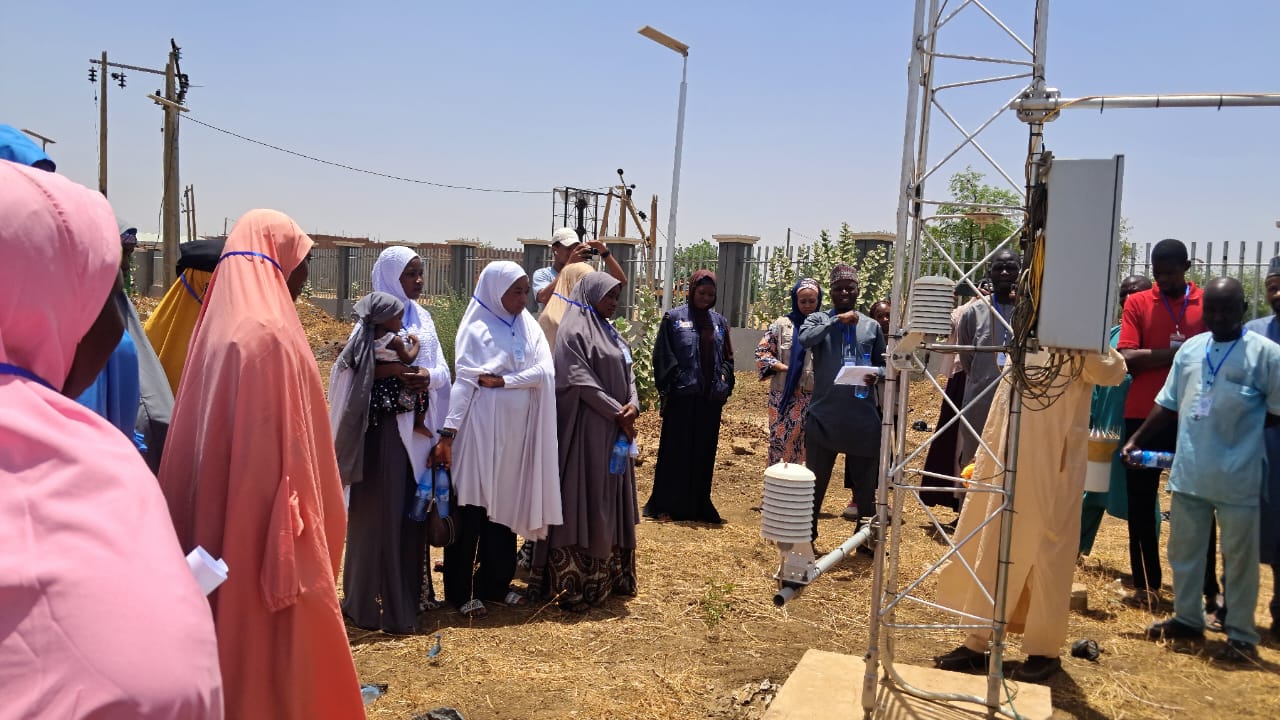
Amid the quiet fields of Wamakko local government area in Sokoto Northwest Nigeria, millet farmer Muhammadu Mode gazes at the small device balanced atop its pole, amazed by how its real-time weather insights are empowering him and his neighbours not only to adapt but to flourish despite growing environmental threats.
As he leaves the spot, his weathered hand wrapped around his hoes, Muhammadu Mode slows his pace and approaches the fields that have sustained him for decades. Memories flood back to a time when farmers read the sky’s secrets—cloud shapes, the whisper of the wind, the pattern of the stars.
“Back then, I relied on nature’s signals, watching the skies and listening to the wind,” he recalls.
“I could tell when rain was coming by the way the wind smelled or the way the birds gathered, and the rains came just in time.”
Yet the era when farmers trusted simple weather lore to guide their hands has faded, giving way to a world ruled by unpredictable storms and relentless droughts.
Though these age-old methods have supported communities for generations, they now falter in the face of wild, shifting weather brought on by climate change.
Tolls of Disruptive Climate Events
The Intergovernmental Panel on Climate Change (IPCC), observes more frequent and intense weather and climate extremes, with the planet’s average surface temperature warmed about 1 degree centigrade above pre-industrial levels, leading to more heatwaves, heavier rainfall and other disruptive events.
Similarly, the World Meteorological Organisation (WMO)’s State of Global Climate 2025 identifies 2015-2025 as the hottest period on record. It notes key connections: warmer air leads to heavier rainfall, higher temperatures cause severe drought, and warmer oceans result in stronger storms.
Here at home, as the skies grow more erratic, farmers like Mode often find themselves gripped by a growing sense of helplessness.
For three decades, Mode has watched the sky and relied on instinct to know when to plant or harvest, letting nature and experience guide every decision.
“With the weather growing more unpredictable, uncertainty about the right time to plant has forced us to gamble with our harvests,” he laments.
“Some days, trusting my instincts paid off, but on others, unexpected storms or relentless droughts destroyed everything, and the constant guessing game about when to plant felt like rolling dice with our future.”
Mode’s experience is shared by countless others across the state. In Ilela, for example, Aliyu Amarawa, who grows sorghum, maize, millet, and beans, battles the same relentless challenges.
“Previously, we lost significant amounts of farm produce because we did not know the optimal time to plant. When heavy rain first occurred, we would begin farming, unaware that it was not the appropriate time,” Amarawa explains.
“We often faced serious challenges when, after the first rainfall, there would be no additional rain for up to 40 days. This caused significant crop damage and losses, requiring us to replant, which is a considerable setback for farmers.”
Around the world, more than 1.3 billion people—nearly four out of every ten workers—depend on agriculture. Yet, shifting climates and fierce weather put their food and livelihoods at risk.
The Food and Agriculture Organisation of the United Nations (FAO), shines a spotlight on the growing threat disasters pose to global agriculture in its flagship report, The Impacts of Disaster on Agriculture and Food Security 2025. The report uncovers a staggering USD 3.26 trillion in losses between 1991 and 2023.
In Nigeria, climate swings hit hard. Sudden downpours, unyielding heat, and fierce storms not only shrink harvests but threaten the very survival of communities like those in Sokoto State, where subsistence farming is the backbone of food security.
With climate change speeding up, luck alone is no longer enough for farmers. They need sharp, timely information to guide their choices, especially as the weather grows more unpredictable. Accurate weather data is fast becoming the secret ingredient for farming success.
Real-Time Data To The Rescue
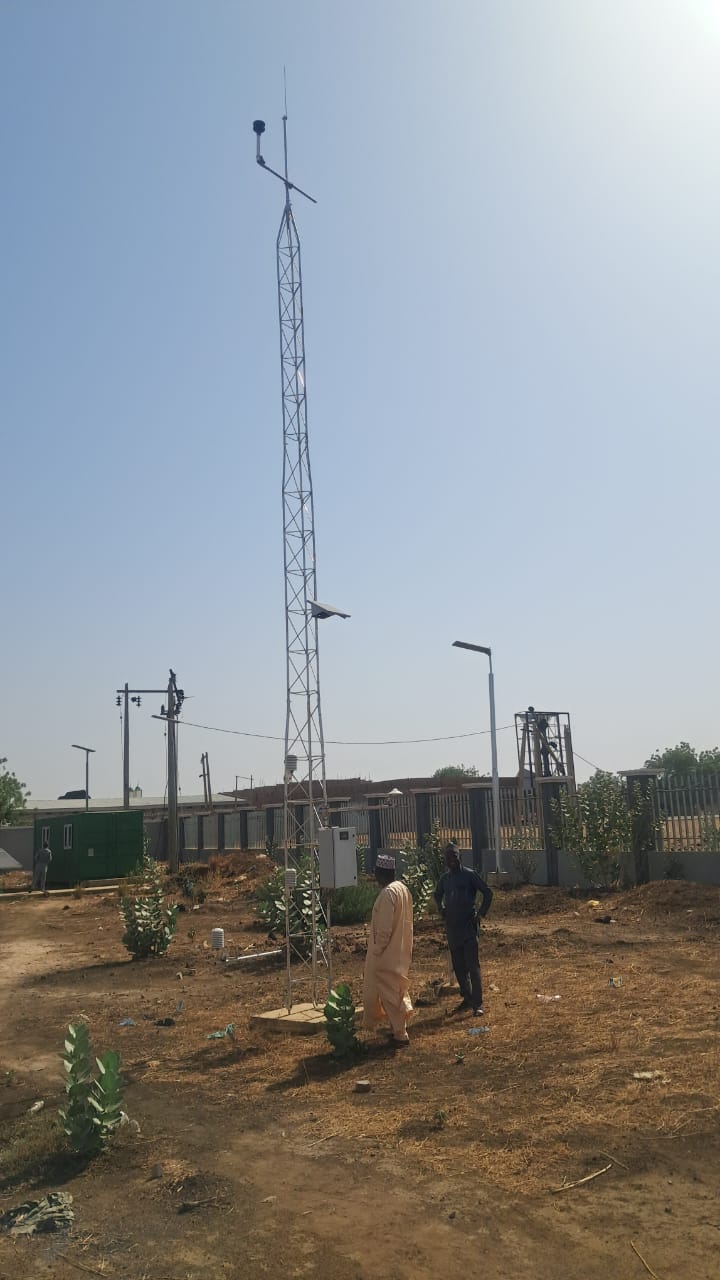
Against this backdrop, the UNDP Climate Security Project, supported by the Norwegian government, in 2024 collaborated with the Nigerian Meteorological Agency (NiMet) and emergency agencies to establish in Sokoto State, Automated Weather Stations (AWS) – small, precise devices that provide actual data on temperature, humidity, rainfall, wind speed, and more.
AWS brings real-time, local weather insights straight to communities, especially farmers, empowering them to anticipate and tackle climate challenges with newfound confidence.
“Climate change is taking a toll on our people’s livelihoods. To fight back, we have rolled out several strategies, such as deploying Automatic Weather Stations in some communities. Every day, we gather vital data which NIMET shares with farmers,” explains Professor Mu’azu Shamaki, a UNDP/NIMET Consultant.
“The initiative also aims to reduce clashes between farmers and herders. We establish home-based natural resources management committees, and NIMET and UNDP train these people. We have trained them, and they are improving their income.”
The UNDP highlights the necessity for the intervention in Nigeria’s Northwestern State of Sokoto State, noting recurring droughts, overgrazing and reduced rainfall are accelerating land degradation, while tensions between farmers and pastoralists in search of grazing lands, intensify.
“Erratic rainfall, rising temperatures and extreme weather are eroding agricultural productivity and threatening livelihoods, especially in regions where farming is not just an occupation but a survival,” it states. “In Northwest Nigeria, where agriculture is rain-fed and semi-arid, the effects are stark. Planting and harvesting cycles are no longer predictable. Crops struggle to complete their growth.”
According to the United Nations Development Programme, at the heart of the problem is a lack of reliable weather data.
“Most farmers still rely on intuition and cloud-watching to guide their decisions. In a changing climate, that’s not enough, “it adds
“In such climate-affected and conflict-prone areas (Sokoto and Katsina States), six automatic weather stations are serving as a bridge between traditional knowledge and innovative climate solutions.”
Once left guessing by unpredictable weather, Muhammadu Mode now relies on the real-time localised data as an essential lifeline for his farming decisions.
“Before, we guessed when to plant and often watched our crops fail. Now, with the arrival of the weather station, we have learned how to understand the weather and farm more wisely. Knowing the weather is crucial,” he states
Mode goes on to share their introduction to a new millet variety called Sanso. “Even if you miss the regular planting window, Sanso gives you a second chance. It thrives and delivers a generous harvest, even when sown late.”
Shafa’atu Isah Matankadi’s smile brightens as she talks about her tomato and pepper farm in Ilela.
“With the weather station nearby, I have a clear idea of when to irrigate and when to wait. “It’s like having a trusted advisor by my side,” she says with a grin.
“Before, I depended on guesswork. But since the installation of the automatic weather station and our training on it, I feel more confident. I can plan my work better, and my family’s future looks brighter.”
Nabila Aminu, a vegetable grower, also shares her newfound empowerment: “I learned about drought if there is drought, we know the type of crops to use so that it will not got spoil even if there is too much rain we know the type of crops to use and can handle things without looking much until the drought finish.”
“I never thought a little device could change my farm,” she says with a laugh. “It gives me the data I need to make smarter decisions. I feel more in control of my harvests, and that makes all the difference.”
So, what exactly makes an Automatic Weather Station tick, and how do these clever devices shape climate monitoring and transform agriculture?
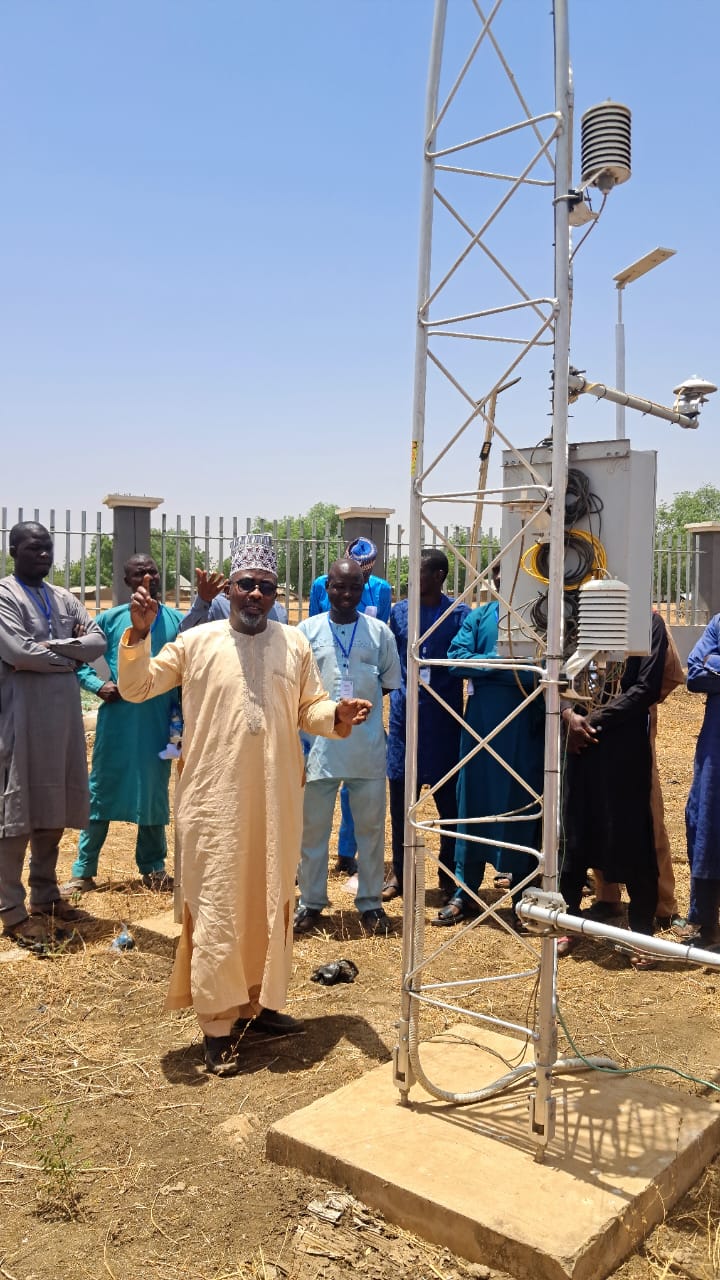
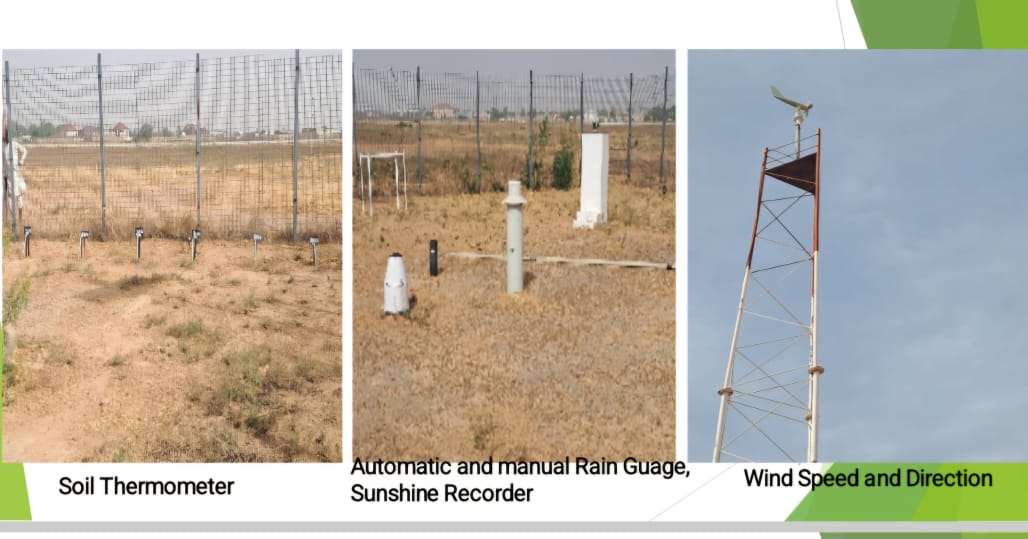
Yawale Baba, State Met Manager at the Nigeria Meteorological Agency (NIMET) in Sokoto, sheds more light on AWS, describing it as an autonomous system that continuously measures and records weather data, including temperature, humidity, wind speed, rainfall, and atmospheric pressure, without human intervention.
He explains that it comes equipped with sensors for temperature, pressure, humidity, and rainfall, and includes all the essential meteorological tools and that the station delivers real-time data, powered by solar energy and internet connectivity, providing minute-by-minute updates.
“Sensors measure rainfall, temperature, humidity, wind speed, and solar radiation continuously; data is sent in real-time via GSM or satellite to NiMet servers and UNDP-supported platforms,” he articulates.
“Meteorologists and agricultural extension officers process the data to generate localised forecasts. Farmers receive weather alerts and advisories through SMS, radio, or community extension services; farmers use this information to plan irrigation, planting, fertilizer application, and harvesting.”
He highlights the agricultural benefits of AWS in Sokoto in rainfall prediction, drought control, pest/disease control, conflict reduction and climate adaptation.”
“It helps farmers decide when to plant crops in semi-arid zones and early warnings reduce crop losses and improve food security, while weather data helps predict outbreaks of locusts or crop diseases linked to humidity,” he points out.
“By improving yields and resilience, AWS reduces competition over scarce resources like water and land. Farmers can shift to drought-resistant crops or adjust planting schedules based on reliable forecasts.
A Wamakko-based farmer, Bello Hamza, expresses gratitude for the invaluable knowledge gained:
“I have built on what I knew before, thanks to this new understanding of the weather. Now, farmers are not losing as much as they used to.”
In Illela, Habiba Aminu, a livestock rearer also appreciates the insights from the AWS, saying it has helped them manage their challenges more effectively.
“We have learned so much and are truly grateful for the new found knowledge,” she shares.
“Things have changed for the better—before, our animals would die during the rainy season or suffer in drought, but now we know how to care for them with fewer problems.”
Habiba is a member of the natural resource management committee, comprising farmers and cattle rearers, recently trained as community weather information champions in Ilela.
“The training has empowered me to share my newfound knowledge with countless people in their communities, reaching those who once lacked access to this essential information.”
Abdulsalam Ibrahim from the IPAC development foundation, leading the UNDP-funded Smart Agriculture project in Ilela local government, reveals that their ambitious goal is to empower 1,000 community weather information champions to spread vital knowledge throughout their communities.
The aim, he says, is to weave this initiative into the fabric of the community, addressing the gap that exists between NIMET’s information and the local farmers who need it most.
“UNDP and NIMET are working together to close the gap by inviting community members to join the network that brings crucial weather updates directly to the grassroots,” he illuminates.
He explains that they are making sure data is not only available but truly useful by championing community-led sharing and translating forecasts into local languages everyone can understand.
Hands-on training and awareness sessions empower farmers to turn this data into smart choices for their daily work.
With these efforts, climate data transforms from mere information into a powerful tool for resilience, helping grassroots communities turn knowledge into action.
For the choice of his LGA as one of the three beneficiaries of the automatic weather station, the Ilela Local Government Chairman, Hon Sirajo Shehu MaiBala is elated, describing it as a laudable initiative that enhances farmers’ ability of the farmers to sow at the appropriate time, reducing losses.
Similarly, Bashir Abubakar Madawaki, Deputy Director of Agriculture and Natural Resources in Wamakko Local Government, observes that this informed approach is not only reducing weather-related risks but also sharpening agricultural planning and clearly boosting harvests.
Drawing from their records, he highlights a noticeable rise in yields compared to previous year, underscoring the positive momentum in local agriculture.
“For example, a farmer who hitherto harvested just 10 bags of rice now gathers 15 to 20 bags; this was due to the benefit of having the weather station. This remarkable boost highlights their growing productivity,” he reveals.
“In the past, droughts and early ending rains would threaten our crops, but since the weather station arrived nearly two years ago, we have not faced these challenges.”
He adds: “Our gratitude for the automatic weather station initiative runs deep. Farmers selected from their villages frequently reach out, eager to express just how much the AWS means to them.”
The Deputy Director expresses local authorities’ commitment to safeguarding the weather station, fostering a supportive environment, and guiding farmers in fully appreciating its benefits.
“We work closely with UNDP officials every day. Whenever questions arise, we reach out for guidance and share updates on any concerns. This teamwork helps make the weather station even more useful for farmers.”
He however identifies the need for specific training for extension workers so they can go to nooks and crannies of the locality in other show practically the benefit of the weather stations, showing them that is why you see improvement in your farm activities and this is how directly the weather station affects your farming practices
However, Madawaki underscores the importance of equipping extension workers with specialised training on AWS, enabling them to connect with every part of the community and demonstrate to farmers the real benefits of the weather station.
“By witnessing its impact up close,” he points out, “farmers across various communities gain a clear understanding of how the weather station transforms their daily routines.”
Corroborating, Sani Umar, Councillor for Wamakko ward, notes that access to real-time data has enabled many farmers to create seasonal crop calendars suited to local conditions, stressing the importance of helping more farmers understand how this technology improves daily practices and opens new opportunities in agriculture.
Aliyu Wakili Wamakko, Chairman of the All-Farmers Association of Nigeria (AFAN) in Wamakko Local Government, hails the arrival of the automatic weather station and its valuable benefits. He urges greater awareness among farmers about the power of real-time, location-specific weather updates, so that their members throughout the local government area can better protect their livelihoods from climate risks.
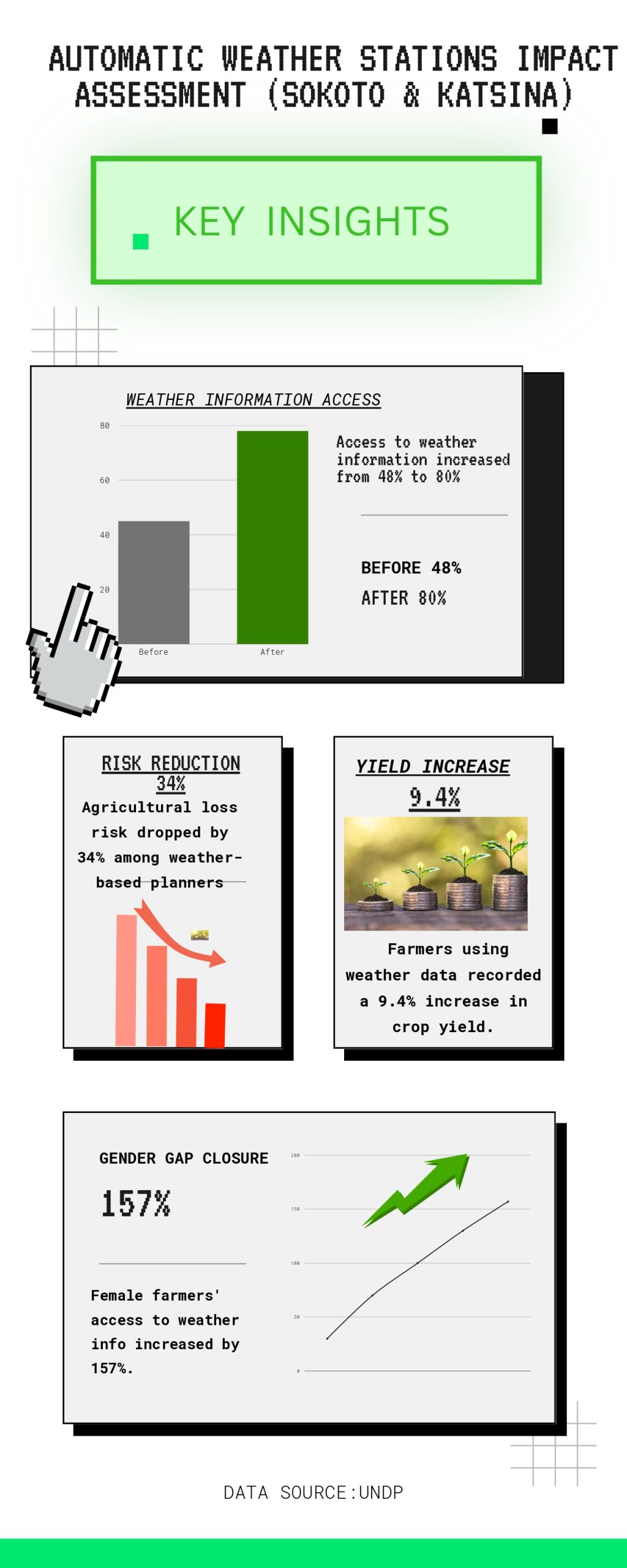
UNDP reports that access to weather information has soared from 48% to 80%, a remarkable leap that highlights how widely these services are now embraced.
The impact assessment also shows that farmers who used weather-based planning saw their risk of agricultural loss fall by 34%, while those relying on NiMet weather updates enjoyed a 9.4% boost in yields, underscoring the real-world rewards of climate-smart choices.
The report further spotlights a remarkable narrowing of the gender gap in climate services, as female farmers gained 157% greater access to weather information.
Hon Aminu Liman Bodinga Special Adviser, Sokoto State Emergency Management Agency (SEMA) applauds the initiative, highlighting how NIMET’s predictions serve as a vital resource for both the government and the people of Sokoto.
He accentuates the shared vision of weaving climate data into SEMA’s planning activities, stressing the unwavering commitment to deepening collaboration between the agency and NIMET.
The Hurdles, The Barriers
The AWS implementers say they prioritise accessible, community-driven methods for sharing alerts and forecasts through local radio, extension workers, and community leaders. However, many farmers report shortcomings, making it difficult to translate available data into practical action.
In Illela, for example, farmers express frustration that residents in the local government area cannot access their own local radio station.
“Right now, anything broadcast by Sokoto radio stations never reaches us in Illela. We only hear local radio if we travel to the state capital or other areas. Sometimes, it is only when visitors from Sokoto bring news that we learn what was shared on the radio,” reveals beans farmer Muhammed Aliyu Amarawa.
“We need our own radio stations here in Illela. Most people rely on Niger radio instead, but if we had access to Sokoto’s local station, we would receive important messages.”
The farmers urge Sokoto radio stations to take action so that people in Illela are not left out when vital information, especially about agriculture, is broadcast.
They also highlight gaps among extension workers, urging that these workers be empowered to provide timely alerts and forecasts with greater impact.
Another hurdle has been the ongoing battle with network issues.
Sokoto Met Manager explains: The main challenge is always the network. In Illela, a border town, the signal often jumps between Nigeria and Niger, making connectivity unpredictable. This network problem is beyond our control, but we do everything we can to keep the system running. Our engineers work tirelessly to maintain it.
The NIMET Manager also points to the problem of equipment vandalism as yet another challenge.
According to the manager, some of the equipment installed in the state have been targeted by hoodlums. Sometimes, culprits are caught, but often, by the time help arrives, the vandals have already made off with crucial sensors.
“These sensors are out of reach in our country; we must import them every time, creating a daunting obstacle for us,” he laments.
“To tackle this, we have stationed security personnel at vulnerable sites and enlisted local community members to keep watch and alert us to any suspicious activity, so we can respond swiftly.”
Out of Sokoto’s 23 local government areas, just three have received automatic weather stations from the UNDP / NIMET initiative. Meanwhile, farmers in the remaining 20 areas are raising their voices, calling for these vital tools so they too can access real-time, location-specific weather updates and better prepare for the challenges of a changing climate.
Discussing AWS deployment to more of Sokoto’s local government areas, he shares: “We are working with partners like UNDP, the Federal Ministry of Agriculture, and the Ministry of Environment.”
“With UNDP, we have projects in Ilella, Wamakko, and Kebbe. The Federal Ministry of Agriculture, through the Trimming project, has helped us deploy AWS in Shagari, Goronyo, and Isa. The Ministry of Environment supports installations in institutions such as the Federal College of Education.”
He sighs in chagrin, noting that although AWS is present in Shagari, Goronyo, and ISA, ongoing security challenges have kept them from visiting often or carrying out their work.
Bringing Weather Insights to Every Acre
To help more farmers benefit from NIMET information, he stresses the importance of working closely with the state government to reach every community.
“We share information through several channels. Each year, we provide a climate seasonal prediction. For Sokoto, we go further by downscaling the data and breaking it down by local government,” he states.
“We provide the information at our level, but it is the state and local governments who carry it to every farmer. They ensure the message reaches even the most remote people, helping to shield them from floods, droughts, and other disasters that could endanger their livelihoods.”
He adds: “Also, if more agricultural extension workers are added, they can take the information we provide and reach even more farmers in the field.”
Experts observe that shifting from guesswork to data-driven farming represents more than just technological progress. It signifies a meaningful move toward greater agricultural sustainability and resilience.
For farmers who use this innovation, AWS insights have turned these weather stations into trusted partners, guiding them to plant smarter, conserve resources, helping them plant wisely, save resources, and keep their crops safe.
As Mode puts it, “this initiative has truly transformed my life. Now, rather than dreading the weather, I work with it.”
This reporting was completed with the support of the Centre for Journalism Innovation and Development (CJID)
