

Rakiya A. Muhammad
Palm oil is a vital food source and trade commodity in Nigeria, serving as a key driver of local economies and livelihoods.
The United States Department of Agriculture reported world palm oil production in 2021 at about 75.46 million metric tons. Nigeria ranks fifth with 1,280,000 metric tons.
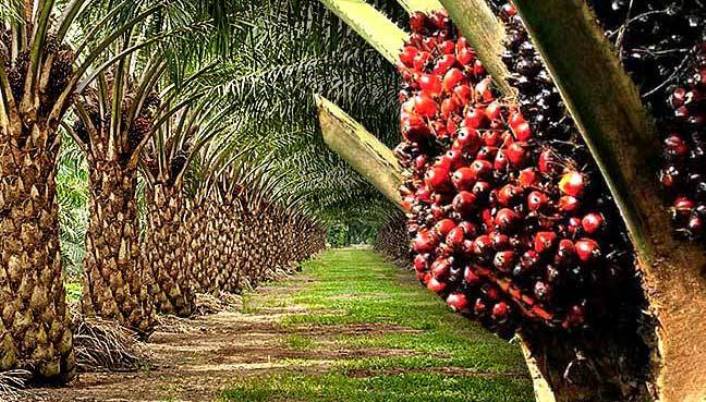
Oil palm plantations blanket Nigeria, especially the southern region.
Cross River State, in the South-South, is a major oil palm-producing state in the country.
Statistics from the State Chambers of Commerce, Mines, and Industry and Agriculture show that in 2018, Cross River produced over 200,000 metric tons of palm oil and had over 360,000 hectares under palm cultivation.
It reported that over 18,000 farmers, mainly locals, actively participate.
Fifty-nine-year-old Emmanuel Ogbechie is one of the smallholders involved in palm oil production in Okuku, Yala LGA, Cross River State, South-South Nigeria.
“I went into palm fruit farming because it’s a promising way forward,” he said, following in his father’s footsteps.
Ogbechie observed, “Palm plantations are now more organised. In the past, wild palm fruits were harvested where they grew. Today, farms are structured with clusters and modern methods, and I’ve cultivated my own land.”
Modern mechanised farming allows some farmers to scale up. With support, many more could succeed and expand their impact.
For his part, Anas Murtala Ahmed, a Cross River-based palm oil marketer, an Indigene of Jos North in Plateau State, North Central Nigeria, revealed:
“I grew up in the family of palm oil dealers. My late father did it for almost his entire life. Upon his passing, my elder brother took over. And here I am neck-deep into it.”
He added, “I have been doing this business for 15 years in Calabar. But I have been in the business for 19 years.”
They bolster food security by delivering palm oil to regions in need.
“We mostly convey palm oil to many states in northern Nigeria because that is where we have the bulk of our clients. Nevertheless, we do sell for our host communities,” the Business Administration Diploma holder said.
“We sell a minimum of four trucks containing 500 jerricans per week.”
He highlighted a marked shift in costs. “A 25-litre jerrican formerly cost N5000-N6000; it now sells for N16,000. Prices fluctuate wildly.”
He described the business as profitable and the future as promising, stressing that palm oil remains in high demand. Its uses span food products such as biscuits, butter, and bread, as well as soap, reinforcing its key role in the economy.
Harnessing Youth Potential
Shifting focus to youth engagement, 41-year-old Alhaji Danlami Saleh from Bauchi State, who owns a thriving palm oil enterprise in Calabar, remarked that palm oil holds many attractions and potential for the youth.
Saleh has been in the business for 24 years and has trained over 30 Nigerian youths in buying, processing, loading, milling, and more.
To quantify these opportunities, they sell a 30-ton truckload of palm oil for N11 million and regularly dispatch up to 7 trucks weekly to northern states.
But the big challenge, he said, is that big firms do go into local farms and buy up palm fruit to their detriment.
Saleh said all they require now is government support to invest in it for greater benefits and establish plantations and processing plants.
He believes increased government focus on the palm oil business can reduce poverty and unemployment.
“The oil palm business has potential. Loans, training, and government support are needed for smallholders. Palm oil could help diversify the economy.”
Palm oil trader Madam Mary Peters noted that the cultivation and processing of palm fruits are a major source of income for many farmers and their dependents.
But she said accessing loans is a major challenge, and stressed the need to boost opportunities for smallholders.
Collaborating to Advance Shared Goals
For seasoned palm oil dealer Mallam Nafiu Musa from Jos, Plateau State, who has been in the industry for over 25 years, the business brought him to Calabar.
“It is a family business. My late father was in it much of his life before he died. As I used to do before my father died, I now buy large quantities of palm oil and send them to my younger brother in Jos, who then sells it and remits proceeds to me in Calabar.”
He collaborates with numerous farmers in Akpabuyo, Akamkpa, and Bakassi LGAs, entering binding agreements.
“We do give them loans to rent and cultivate the lands. They will harvest and mill the fruits and then supply the oil to us,” he said.
“Many smallholder farmers lack sufficient capital for farm improvement. They come to us for assistance. We inspect, set conditions; if agreed, we sign. The farmer delivers the oil, enabling us to recover our funds.”
He acknowledged the palm oil business is lucrative for his family, despite occasional setbacks with farmers who breach credit terms.
“The future of the palm oil business in Nigeria is excellent only if the government can help,” he pointed out, stressing that the country’s palm oil output can sustain industries and private demand.
“Nigeria’s palm oil is renowned globally for its quality. Nigeria’s quality is the best. I have traded in and tasted palm oil from Ghana, Cameroon and Malaysia,” he observed.
“They are no match for Nigeria. We have the sweetest and scented oil with nutrients.”
Addressing Key Challenges
Analysts highlight that private smallholders, mostly economically active poor, dominate palm oil production. They argue that investing in smallholders is essential for the sustainable growth of the sector.
The National Survey and Segmentation of Smallholder Households in Nigeria reported: “Based on Nigeria’s official definition of smallholders, more than 80 per cent of farmers in Nigeria are considered smallholders because they own less than 5 hectares of land.”
It highlighted major constraints to smallholder farming in Nigeria, including “the lack and high cost of labour and agricultural inputs in rural areas; limited access to information, modern agricultural technology, and adequate financial services; a land tenure system that prevents the acquisition of new land, and inconsistent support from local government councils.”
A study by the Centre for International Forestry Research CIFOR and Partner institutions looked at how smallholders can conquer funding challenges. Recommendations include incentives and technical support to meet sustainability standards, risk evaluation, and capacity building for smallholder organisations.
To make these findings easier for policymakers to translate into actionable steps, stakeholders urge the provision of targeted financial incentives and subsidies for smallholder farmers, including access to low-interest loans and grants.
Others include developing and expanding technical support programs, such as extension services and training in modern agricultural practices and sustainability. They emphasise the need to streamline land tenure policies to enable smallholders to obtain and develop farmland, reduce bureaucracy, and secure ownership.
Ensuring these key initiatives will fortify smallholder farming and spur broader economic and social progress.
