Rakiya A.Muhammad
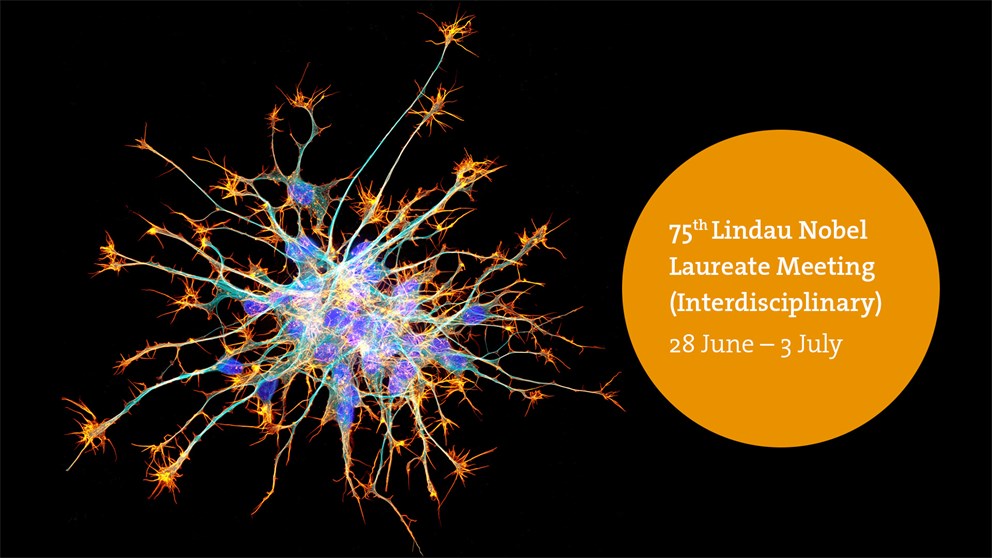
The 75th Lindau Nobel Laureate Meeting opened Sunday in Lindau, Germany, marking an anniversary edition that brings together around 70 Nobel Laureates and more than 600 Young Scientists from around the world to shape the future of science.
Countess Bettina Bernadotte, President, Council for the Nobel Laureate Meetings, opened the Interdisciplinary programme, which celebrates 75 years of scientific excellence, international dialogue, and personal exchange.
“Science is, ultimately, a shared human endeavour, as also mentioned in Alfred Nobel’s will,” he stated.
“Science is, ultimately, a shared human endeavour, as also mentioned in Alfred Nobel’s will,” he stated.
“And that is the reason why our anniversary motto reads: ‘Science Transcending Borders.’”
He asserted, “For 75 years, Lindau has shown that curiosity travels farther than borders can draw lines. Science does not ask where we come from. It asks what we can discover together.”
Frank-Walter Steinmeier, President of the Federal Republic of Germany, praised efforts to push the boundaries of knowledge.
He said, “Here in Lindau, however, you are also breaking down barriers in a figurative sense – between people from different countries and generations, and between very different scientific cultures, traditions, and disciplines – and have been doing so for 75 years now as we just heard.”
Dorothee Bär, German Federal Minister of Research, Technology and Space, described the 75 years of Lindau Nobel Laureate Meetings as a real milestone.
“Cooperation and exchange across the world are the prerequisite for scientific freedom and excellence,” the Minister pointed out.
“This platform for networking, intercultural dialogue, and expert exchange is of immense value and truly unique.”
Bär noted that many outstanding young scientists participate every year and often reap benefits throughout their subsequent scientific careers,underscoring the need to lay the foundation for tomorrow’s scientific excellence.
Bär noted that many outstanding young scientists participate every year and often reap benefits throughout their subsequent scientific careers,underscoring the need to lay the foundation for tomorrow’s scientific excellence.
The week-long event will run from June 28 to July 3, 2026, highlighting key themes of resilience, information, integrity, life, and the interconnectedness of challenges that shape the world.
Key questions include:How can science strengthen societies in a fractured and rapidly changing world? What does it mean to generate, interpret, and truly understand information in an era shaped by quantum technologies and artificial intelligence?
Others include: Who sets the rules for science, and who benefits from them? And how did life emerge ,how does it persist, and why does it end?
